HLA Gene Typing
Molecular typing of human leukocyte antigen (HLA) genes for the diagnosis of autoimmune diseases, donor selection in transplantation, and assessment of immune response risks.

HLA (Human Leukocyte Antigens)
Histocompatibility antigens (HLA – Human Leukocyte Antigen) play a key role in the immune system, determining how each person’s body recognizes and eliminates pathogenic agents.
HLA genes encode major histocompatibility complex (MHC) proteins that populate the cell surface and present antigens to immune cells, triggering an immune response.
Genetic variability of HLA underlies individual differences in immune reactions, which determines:
- The likelihood of developing autoimmune diseases;
- The susceptibility to infectious diseases;
- The success of organ and tissue transplantation.
HLA system genes are considered among the most important risk factors for the development of certain autoimmune diseases.
There are two main classes of HLA genes:
- Class I (HLA-A, HLA-B, HLA-C) – expressed on all nucleated cells. MHC I present intracellular antigens (for example, fragments of viral and tumor proteins) on the cell surface, thereby helping the immune system distinguish “self” cells from “non-self.”
- Class II (HLA-DQ, HLA-DR, HLA-DP) – expressed on antigen-presenting cells (macrophages, dendritic cells, B lymphocytes). MHC II presentspresent peptides derived from pathogens or foreign cells after phagocytosis. MHC II initiatesinitiate the adaptive immune response, participatesparticipate in humoral immunity, and regulatesregulate autoimmune processes.
Why we perform HLA typing
HLA typing identifies an individual’s HLA allele variants. This information is clinically useful in several areas:
- Transplantation. Matching donor and recipient HLA profiles is a critical factor for successful organ and tissue transplantation. The greater the concordance of HLA alleles, the lower the risk of graft-versus-host disease and graft rejection.
- Autoimmune diseases. Certain HLA alleles are associated with predisposition to autoimmune diseases. Established associations include: HLA-B27 – ankylosing spondylitis (Bechterew’s disease); HLA-DR4 – rheumatoid arthritis; HLA-DQ2/DQ8 – celiac disease; HLA-DR3/DR4 – type 1 diabetes mellitus. Autoimmune disturbances, even in the absence of clinical manifestations, can lead to reproductive disorders at various stages.
- Reproductive medicine. HLA typing is recommended in cases of recurrent pregnancy loss, since allele matching between partners may result in insufficient antigenic stimulation of the woman’s immune system, reduced production of protective (blocking) antibodies, and impaired maternal immune tolerance to the fetus.
HLA-B27: Differential diagnosis of seronegative spondyloarthropathies
HLA-B27 is detected in more than 90% of patients with ankylosing spondylitis, which belongs to the group of “seronegative spondyloarthropathies,” whereas its prevalence in the general population is approximately 8–10%. Carriage of HLA-B27 is associated with earlier disease onset, a higher risk of extra-articular manifestations, and a more aggressive course.
The absence of rheumatoid factor and antinuclear antibodies in the presence of HLA-B27, combined with characteristic clinical and radiologic findings, enables the differentiation of seronegative spondyloarthropathies from rheumatoid arthritis and systemic lupus erythematosus.

HLA-DQA1, HLA-DQB1, and HLA-DRB1: Significance in transplantation, reproductive medicine, and autoimmune diseases
Determination of HLA-DQA1, HLA-DQB1, and HLA-DRB1 alleles is a key step in matching donors and recipients for primary organ transplantation (for example, kidneys). Genotyping at the level of allele groups complies with international standards and is widely used in related and unrelated donor selection.
Specific combinations of HLA-DRB1, HLA-DQA1, and HLA-DQB1 alleles correlate with predisposition to autoimmune disorders. For example, HLA-DRB1 allele variants are associated with the risk of certain autoimmune diseases, including type 1 diabetes mellitus.
HLA typing of married couples is used to identify genetic similarity, since excessive matching of HLA alleles increases the probability that the fetus will inherit two identical copies of the same gene variants (i.e., HLA homozygotes), which may lead to reproductive loss. Differences between spouses in HLA gene variants are one of the important conditions for successful conception and maintenance of pregnancy, making HLA typing a significant tool in the diagnosis of reproductive disorders.

List of PCR studies
-
HLA-DQA1, HLA-DQB1, HLA-DRB1
The tests are designed for HLA class II typing (DQA1, DQB1, DRB1) by real-time PCR.
Learn more -
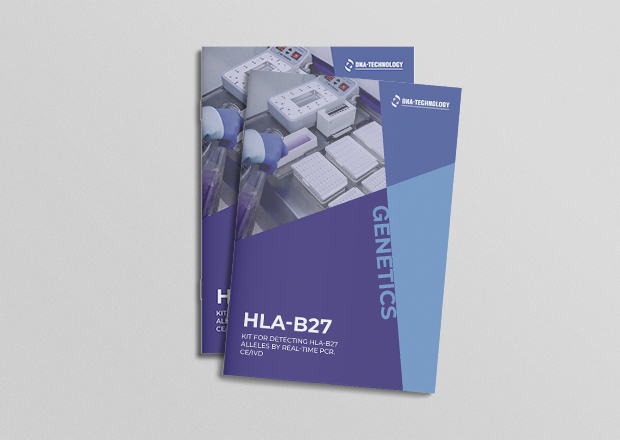
HLA-B27
The test is designed for detection of B27 allele of human major histocompatibility complex (HLA) class I by real-time PCR.
Learn more
Information


Ask questions
Please note that the specialists of the DNA Technology company provide consultations exclusively to medical specialists on the application and research features. Requests related to the appointment, delivery, or interpretation of tests are not considered. For relevant information, we recommend contacting the laboratory directly.