Papillomavirus infections
Molecular genetic diagnostics of papillomavirus infections. PCR assays allows for typing and quantitative determination of certain types of virus, which is widely used for prevention and diagnostics of HPV-associated cancerous diseases.

Human papillomavirus
Human papillomavirus (HPV) is the primary etiological factor in the development of a wide spectrum of oncological diseases, such as cervical, vulvar, vaginal, anal canal, penile, head and neck, and esophageal cancers, as well as anogenital warts and recurrent respiratory papillomatosis.
According to WHO data, high-risk oncogenic HPV types include 16, 18, 31, 33, 35, 39, 45, 51, 52, 56, 58, 59, 66, and 68. HPV infection causes approximately 5% of all cancer cases worldwide, with HPV-associated cancer diagnosed annually in 625,600 women and 69,400 men. Approximately 50% of cervical precancerous conditions are caused by HPV types 16 and 18.

Transmission and diagnostics
HPV is a highly contagious mucosotropic and dermatotropic virus transmitted through any form of sexual contact; infection in children is also possible during birth via the vaginal canal. Infection is facilitated by the presence of microtraumas and inflammatory processes in the skin and mucous membranes, leading to reduced local immunity. During infection, HPV targets immature cells primarily in the basal layer, which become a persistent source of infection for epithelial cells. Within basal layer cells, the virus can remain in a latent state for an extended period, meaning it can be detected by PCR even in the absence of clinical and cytological changes.
The virus is knows to undergo self-elimination within several years. However, the presence of high-risk oncogenic HPV in squamous epithelial cells is a prerequisite for the development of cervical precancer, and persistent HPV infection is a key risk factor for squamous cell carcinoma of the cervix.
HPV screening
An effective method for cervical cancer prevention is HPV screening and the treatment of precancer conditions.
- WHO recommends HPV DNA detection as the preferred primary screening test (compared to cytology and visual inspection with acetic acid).
- WHO recommends regular screening every 5–10 years by testing for high-risk oncogenic HPV DNA as the primary screening method for the general population of women. It is recommended to test for HPV 16, 18, 31, 33, 35, 39, 45, 51, 52, 56, 58, 59, 66, and 68. Furthermore, it is recommended that the testing include genotyping for HPV 16/18, as well as HPV 45.

Indications for the assay:
-
 Clarification of diagnosis
 -
 Screening
 -
 Presence of papillomatous lesions and abnormal changes
 -
 Follow-up monitoring of patients with HPV-associated conditions
 -
 Unprotected sexual intercourse
 -
 Cervical pathology
 -
 Abnormal findings on colposcopy or cytological examination
 -
 History of other sexually transmitted infections or current STIs
List of PCR studies
-
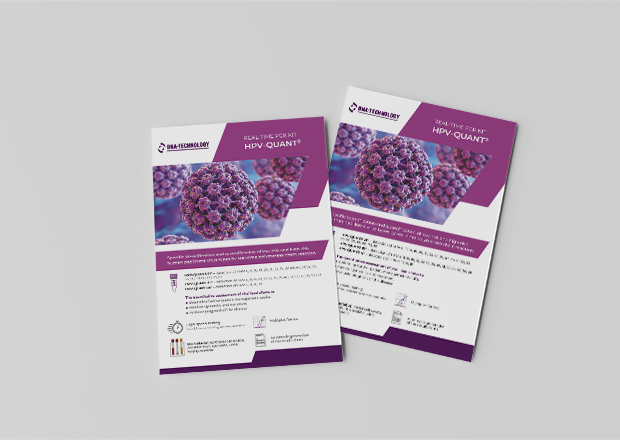
HPV QUANT
A comprehensive range of PCR studies for the detection, typing, and quantification of HPV strain DNA.
HPV Quant-4. Detection, typing, and quantification of human papillomavirus DNA of low (HPV 6, 11) and high (HPV 16, 18) oncogenic risk.
HPV Quant-15. Detection and quantification of human papillomavirus DNA of low (HPV 6, 11) and high (HPV 16, 18, 31, 33, 35, 39, 45, 51, 52, 56, 58, 59, 68) oncogenic risk.
HPV Quant-21. Detection, typing, and quantification of human papillomavirus DNA of low (HPV 6, 11, 44) and high (HPV 16, 18, 26, 31, 33, 35, 39, 45, 51, 52, 53, 56, 58, 59, 66, 68, 73, 82) oncogenic risk.
Learn more -
HPV 16, 18
The test is designed for the detection of human papillomaviruses of high oncogenic risk (HPV 16, HPV 18) in human biological material by real-time PCR.
Learn more
-
HPV Screen
The test is designed for detection of 14 HPV types with high oncogenic risk with differentiation of types 16, 18, 45.
Learn more
Information

Ask questions
Please note that the specialists of the DNA Technology company provide consultations exclusively to medical specialists on the application and research features. Requests related to the appointment, delivery, or interpretation of tests are not considered. For relevant information, we recommend contacting the laboratory directly.