BacScreen AEI 1
The test designed for detection of DNA of thermophilic Campylobacter (Campylobacter coli and Campylobacter jejuni), bacteria of the genus Shigella, enteroinvasive E. coli (EIEC), and bacteria of the genus Salmonella in human biological material using real-time PCR.
Category «Enteric infections»
Salmonella spp., Shigella spp., Campylobacter spp.
Salmonella spp., Shigella spp., enteroinvasive E. coli (EIEC), and Campylobacter jejuni/coli are among the leading causes of infectious diarrhea worldwide and pose a significant risk to children, the elderly, and immunocompromised patients.
Shigella spp. and enteroinvasive E. coli (EIEC) are Gram-negative bacteria and common causative agents of acute intestinal infections: shigellosis and escherichiosis. They share similar pathogenic mechanisms aimed at invading and destroying the colonic epithelium. EIEC are practically indistinguishable from Shigella spp. in their microbiological and epidemiological characteristics.
Salmonella spp. are Gram-negative bacteria; the most clinically significant for humans are S. enterica serovars Typhi and Paratyphi (causative agents of typhoid and paratyphoid fever), as well as numerous serovars that cause acute intestinal infections (salmonellosis).
Campylobacter spp. are Gram-negative, non-spore-forming bacteria and are among the most common causes of bacterial gastroenteritis. They are characterized by high adhesive and invasive activity and rapid colonization of the distal small and large intestine. Key adhesion factors include flagella and specific surface adhesins. Campylobacter produce cytotoxins, endotoxin, and heat-labile enterotoxin. Campylobacter coli and Campylobacter jejuni remain the most clinically significant species, accounting for about 90% of campylobacteriosis cases.

Transmission routes and symptoms
The primary mode of transmission is fecal–oral, occurring via food, water, and household contact routes. The source of infection for salmonellosis, shigellosis, campylobacteriosis, and escherichiosis is humans (patients and carriers), as well as animals (particularly for salmonellosis, campylobacteriosis, and escherichiosis).
After entering the gastrointestinal tract, pathogens overcome the mucosal epithelial barrier, including the gastric acid barrier, and colonize various parts of the intestine, causing local inflammation and a systemic immune response. Clinical manifestations vary widely, from asymptomatic carriage and mild forms to severe invasive disease.
Main clinical forms include:
- Colitis: characterized by cramping pain in the lower abdomen, frequent loose stools with blood and mucus, and painful false urges to defecate (tenesmus); most typical for shigellosis and campylobacteriosis.
- Gastroenteritis: presents with watery diarrhea, nausea, vomiting, and upper abdominal pain; often accompanied by marked intoxication and fever, especially in salmonellosis.
- Generalized forms (e.g., typhoid-like and septicemic variants in salmonellosis and campylobacteriosis): characterized by sepsis, meningitis, osteomyelitis, and other serious complications; most common in immunocompromised patients.
- Asymptomatic carriage: the infected individual has no clinical symptoms but sheds pathogenic bacteria in the stool and can serve as a source of infection.
Typhoid and paratyphoid fever (caused by S. enterica serovars Typhi and Paratyphi) should be considered separately; they are characterized by prolonged fever, intoxication, bacteremia, rose-colored rash, involvement of the intestinal lymphatic system, and hepatosplenic syndrome.
Risk factors for severe and complicated forms of infection:
- Age under 5 years;
- Elderly age;
- Immunodeficiency conditions;
- Reduced gastric acidity.
PCR diagnostics enables highly accurate identification of the infectious agent even at low pathogen loads and in asymptomatic carriers. Performing the BacScreen AEI 1 PCR test ensures rapid results, which is important for timely initiation of therapy.

Indications
-
 Differential diagnosis of acute intestinal infections;
 -
 Examination of individuals who have been in contact with a patient with an acute intestinal infection;
 -
 Diagnosis of asymptomatic carriage;
 -
 Examination of at-risk patients when symptoms of intestinal infection appear;
 -
 Monitoring the effectiveness of antibacterial therapy.
BacScreen AEI 1
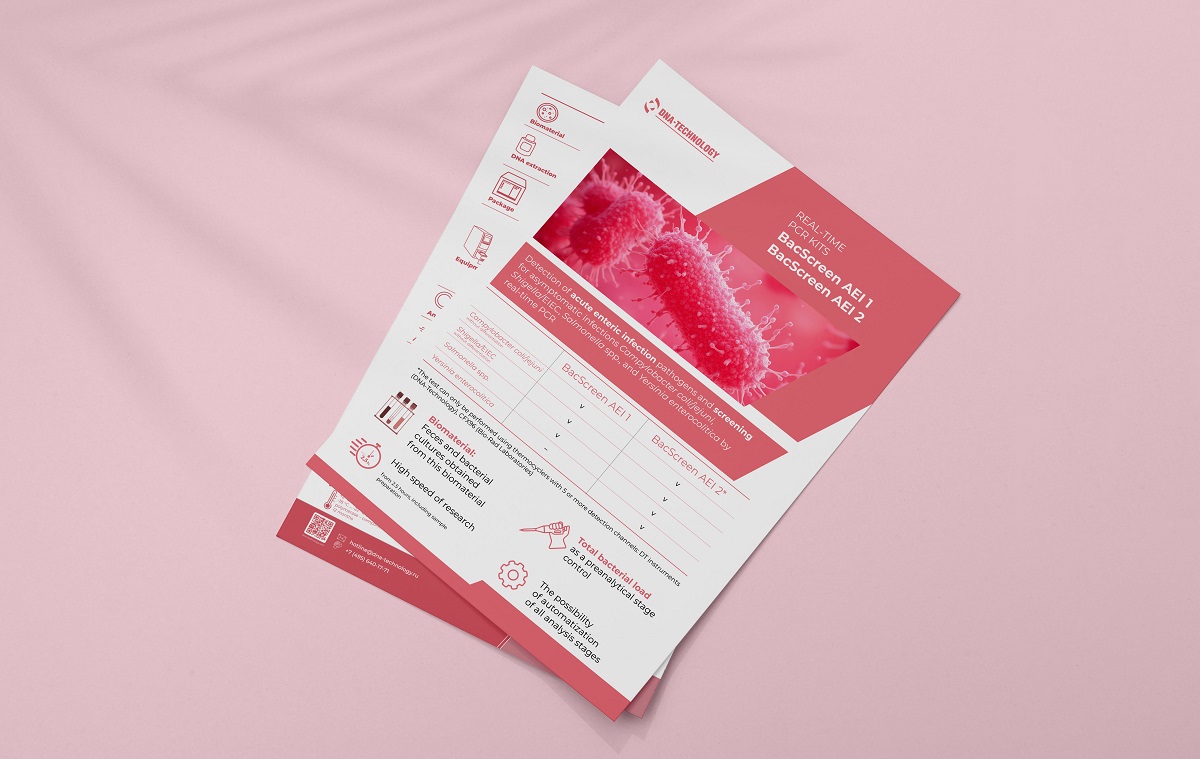
The BacScreen AEI 1 REAL-TIME PCR Detection Kit is designed for detection of thermophilic campylobacteria Campylobacter coli and Campylobacter jejuni (without differentiation), Shigella bacteria and enteroinvasive E.coli (EIEC) (without differentiation), and Salmonella spp. bacteria DNA in human biological material (feces) and bacterial cultures obtained from this biomaterial by realtime PCR.
The BacScreen AEI 1 REAL-TIME PCR Detection Kit can be used in research practice.
Sample: Feces; bacterial cultures obtained from feces
READ MORE
Information
Ask questions
Please note that the specialists of the DNA Technology company provide consultations exclusively to medical specialists on the application and research features. Requests related to the appointment, delivery, or interpretation of tests are not considered. For relevant information, we recommend contacting the laboratory directly.