ENTEROFLOR® Kiddy
Multiplex gut microbiota study for kids from birth to 14 years of age, quantitative detection of 43 specific indicators.
Category «Microbiota Research»
ENTEROFLOR® Kiddy
Multiplex PCR assay that determines up to 99.9% of microbiota composition
- For children aged 0 to 14 years.
- Biological material: feces; meconium (for newborns)
- The test is based on real-time PCR, one of the most accurate and rapid methods.
- Registered in Russia and abroad as a medical device.

Advantages ofENTEROFLOR®Kiddy
Gut microbiota state assessment by relative normal and opportunistic biota content in total bacterial load (TBL)
-
99,9%
Quantitative detection of 43 indicators comprising 99.9% of children’s gut microbiota
-
Flexible storage conditions
Samples can be stored at temperatures between 2°C and 8°C for up to 3 days.
-
Age-specific test
The report is generated considering age-specific norms for the gut microbiota composition of children.
-
Scientific approach
Developed based on modern fundamental knowledge of the human microbiome.
-
High speed
Test results can be obtained in just a few hours.
-
Versatility
Can be performed simultaneously with other stool tests (e.g., acute intestinal infections, microbiological testing).

We recommend ENTEROFLOR®Kiddyin the following cases:
- Intestinal dysfunction in children during intensive antibiotic and/or immunosuppressive therapy, prolonged chemotherapy, or hormonal therapy
- Prolonged recovery period after dysentery and other acute intestinal infectious diseases
- Preoperative period in individuals with risk factors for developing intestinal dysbiosis
- Intrauterine infection
- Allergic diseases (atopic dermatitis, bronchial asthma, etc.) that are difficult to treat
- Early artificial feeding
- Breast milk intolerance
- Immunodeficiency conditions
- Frequent acute respiratory infections
- Stomatitis, oral thrush
- Monitoring the formation of intestinal microbiota in infants during the first year of life
- Delayed weight gain or weight loss, delayed physical development

ENTEROFLOR® Kiddy explained
New short videos with answers to the most common questions from doctors and patients about ENTEROFLOR® Kiddy:
- When and for whom is ENTEROFLOR® Kiddy recommended?
- What does the test detect?
- How long does one store biomaterial?
- What are the indications for the test?
Main ENTEROFLOR® Kiddy indicators
Gut microbiota state assessment by relative normal and opportunistic biota content in total bacterial load (TBL):
- quantitative assessment of normal biota representatives: Actinomycetota (prev. Actinobacteria), Bacillota (prev. Firmicutes), Bacteroidota (prev. Bacteroidetes), Pseudomonadota (prev. Proteobacteria*) phyla, opportunistic microbiota and Candida fungi.
- diversity of normal microbiota
- quantity of Bifidobacterium and lactobacilli
- Bifidobacterium species
- presence of Bacteroidota (Bacteroidetes) representatives
- Bacillota (Firmicutes) / Bacteroidota (Bacteroidetes) ratio
- pathogenicity and resistance factor
* According to nomenclature approved by International Committee on Systematics of Prokaryotes (ICSP)
You can find the full list of detected indicators on page 2 of specific report.
FIND OUT MOREENTERFOLOR® Kiddy specific report
Specific report is formed automatically:
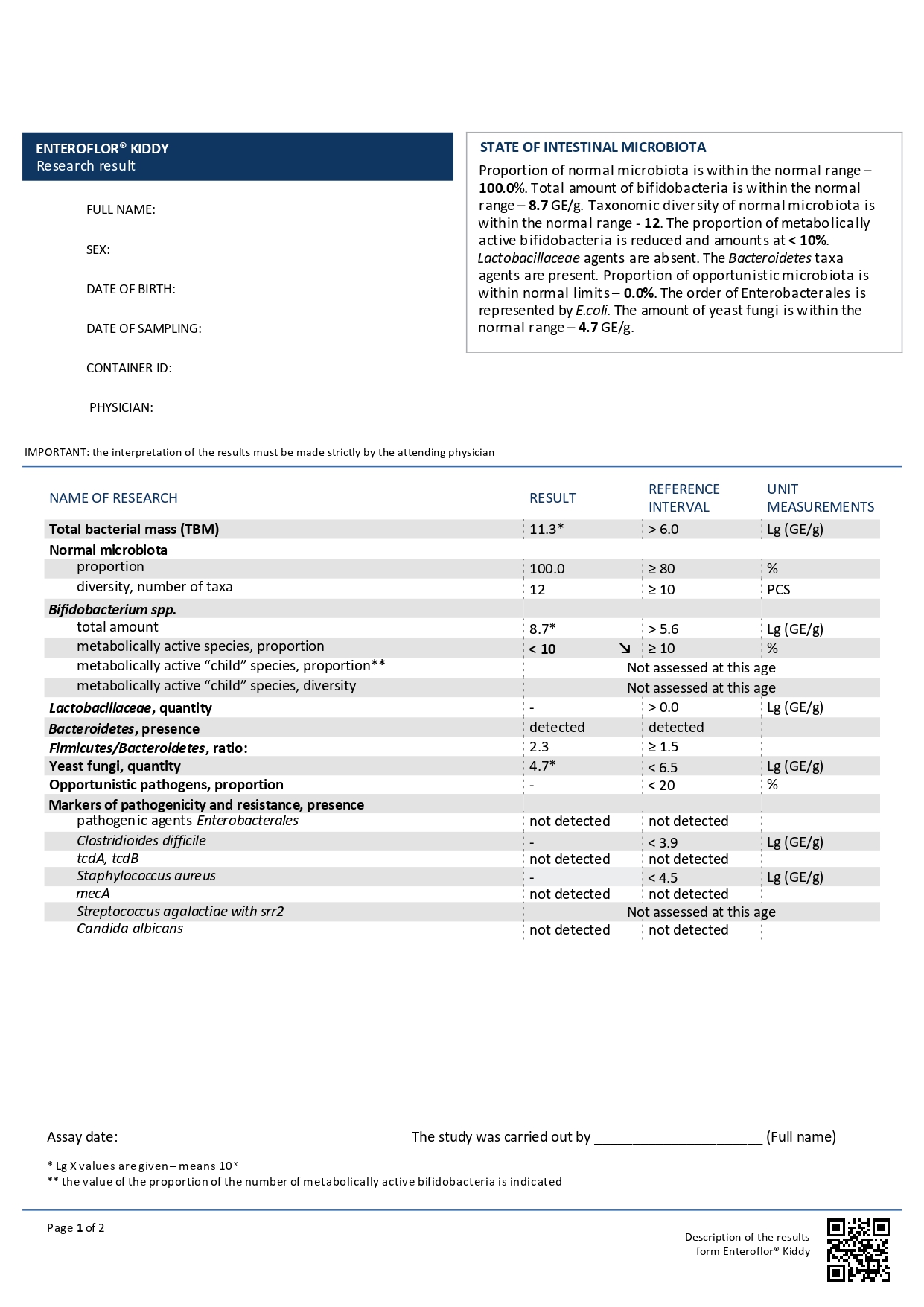
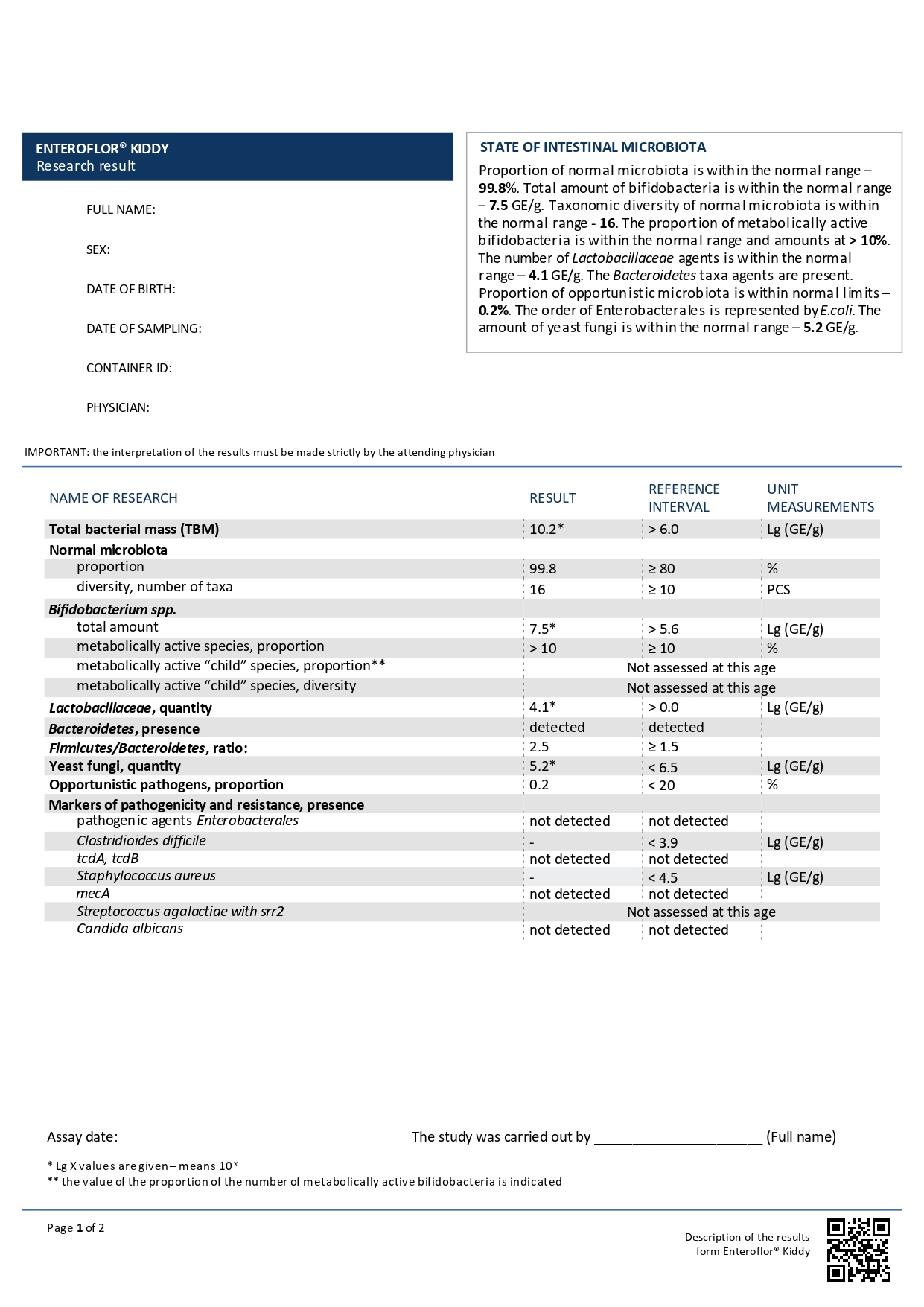
- Page 1 of the report contains brief description of gut microbiota state and a final table with the main assay results.
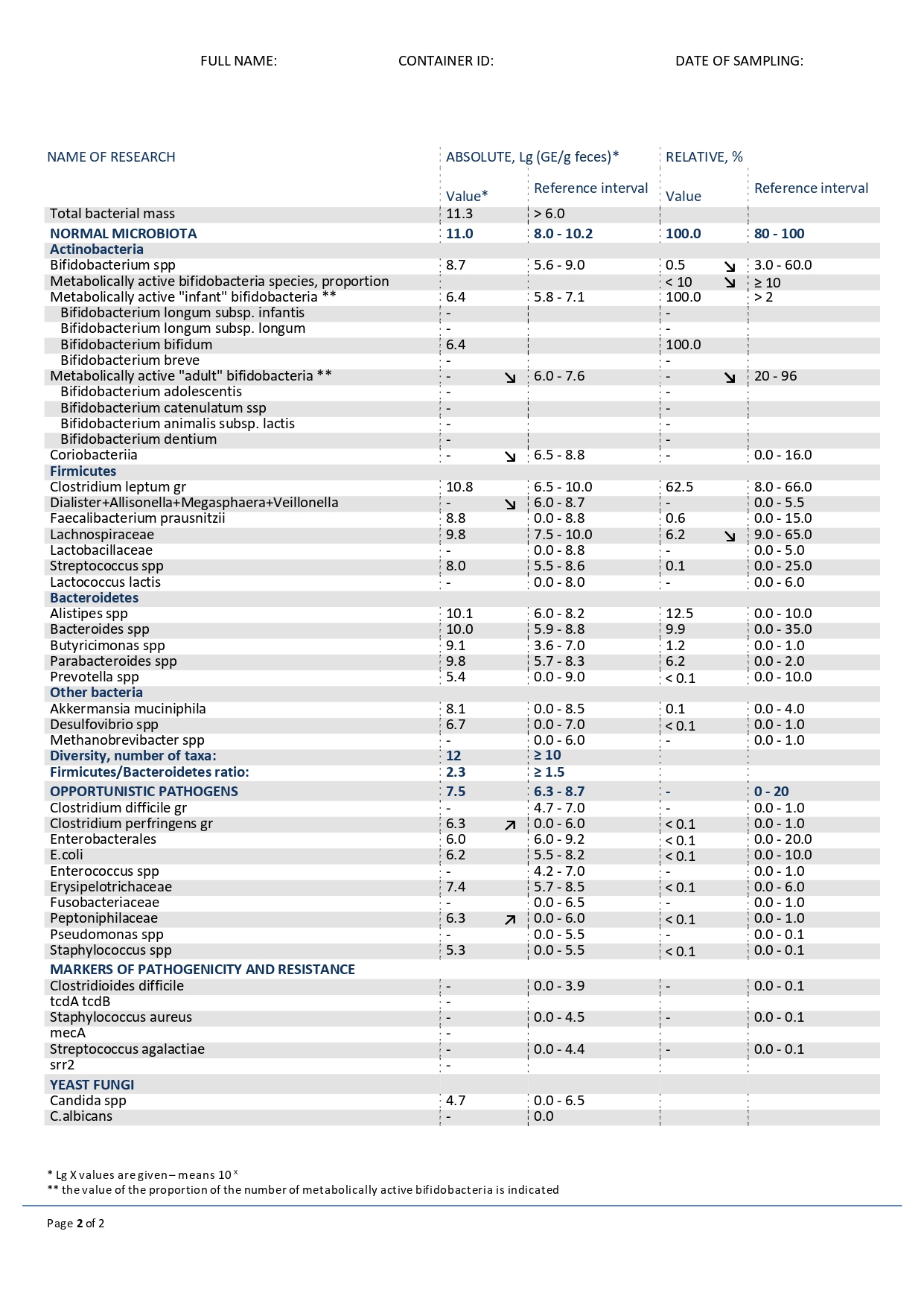
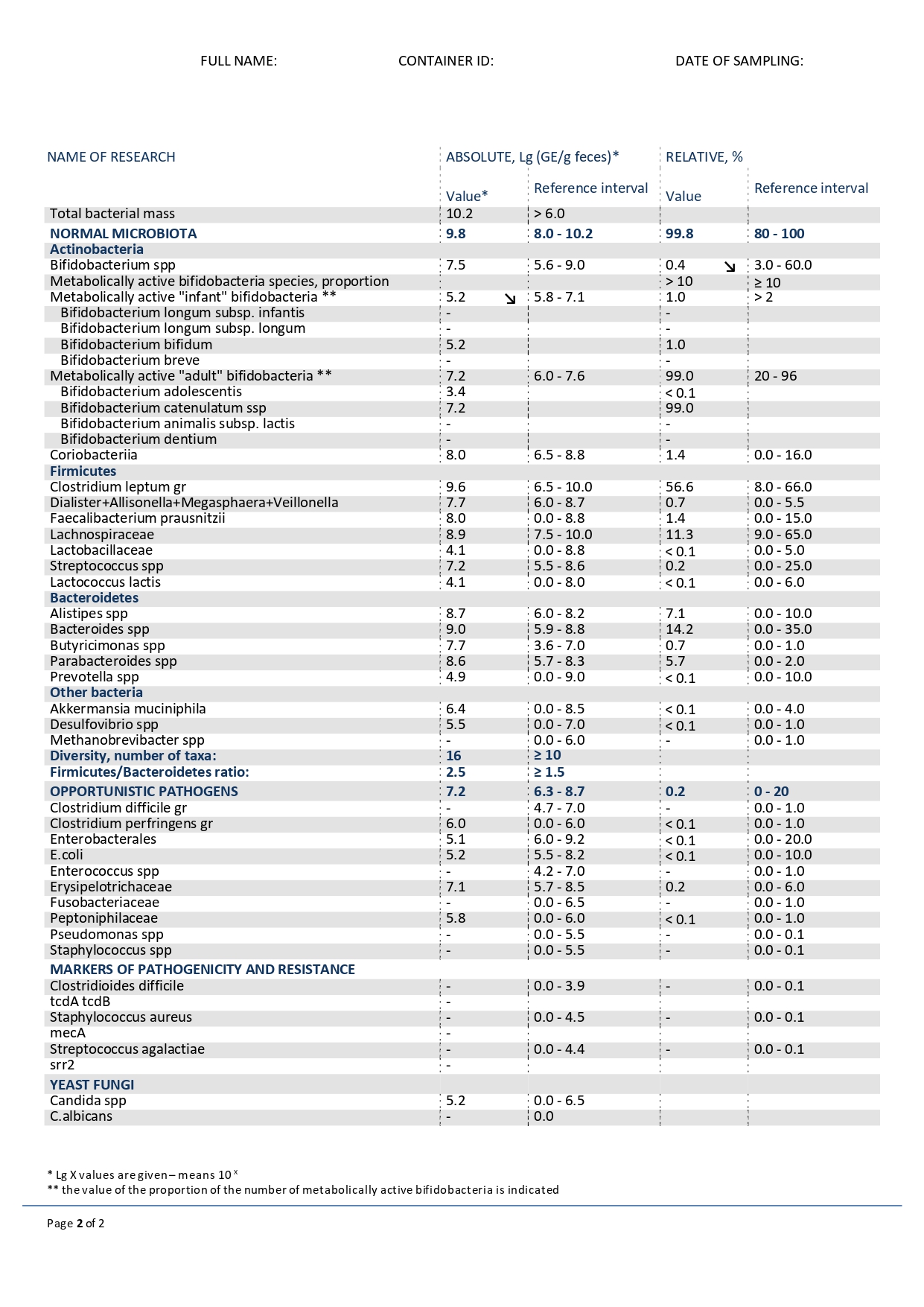
- Page 2 of the report contains a table with full list of assay results. Бланк исследования ЭНТЕРОФЛОР® Дети (2 стр).pdf Download

Report examples
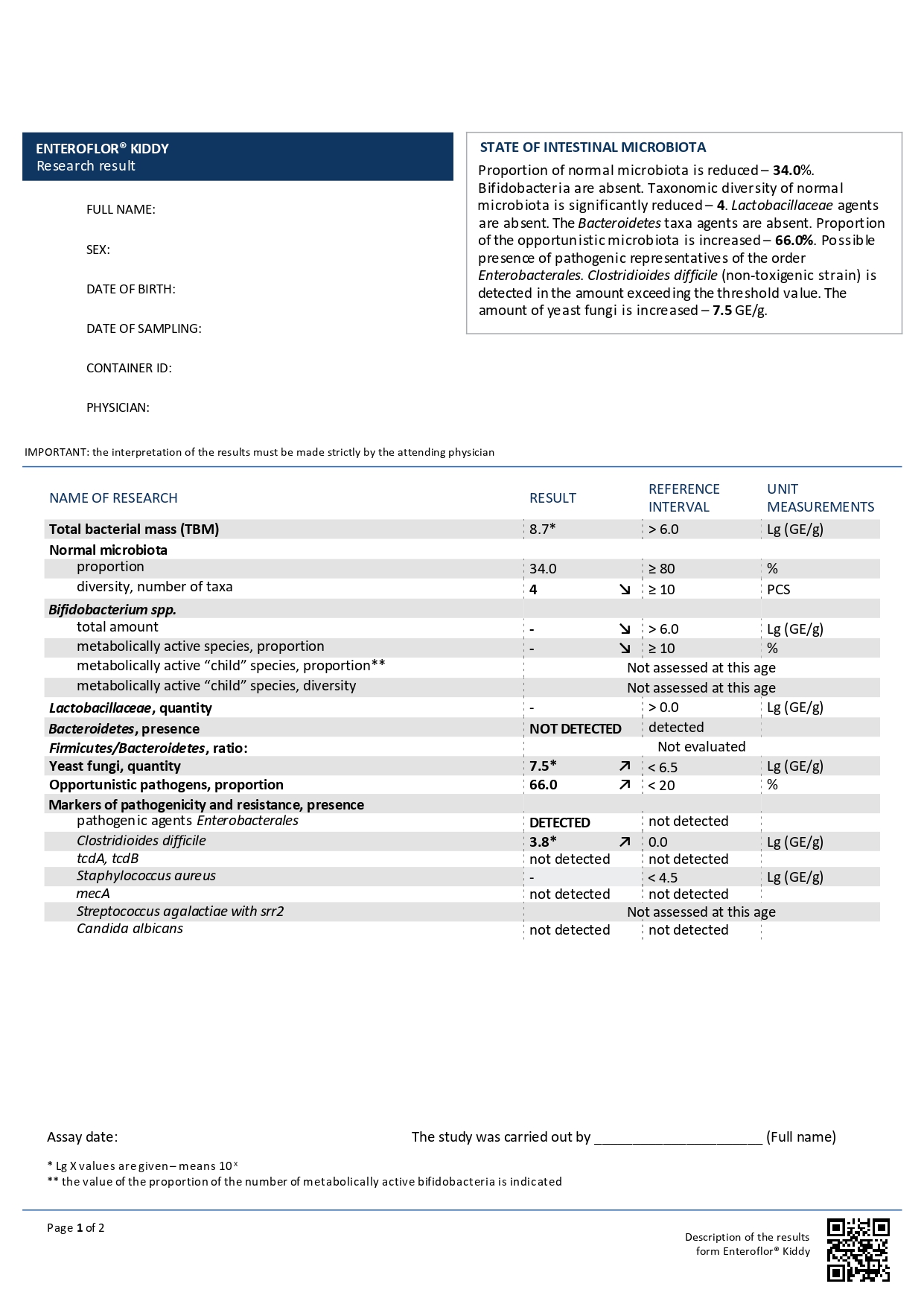
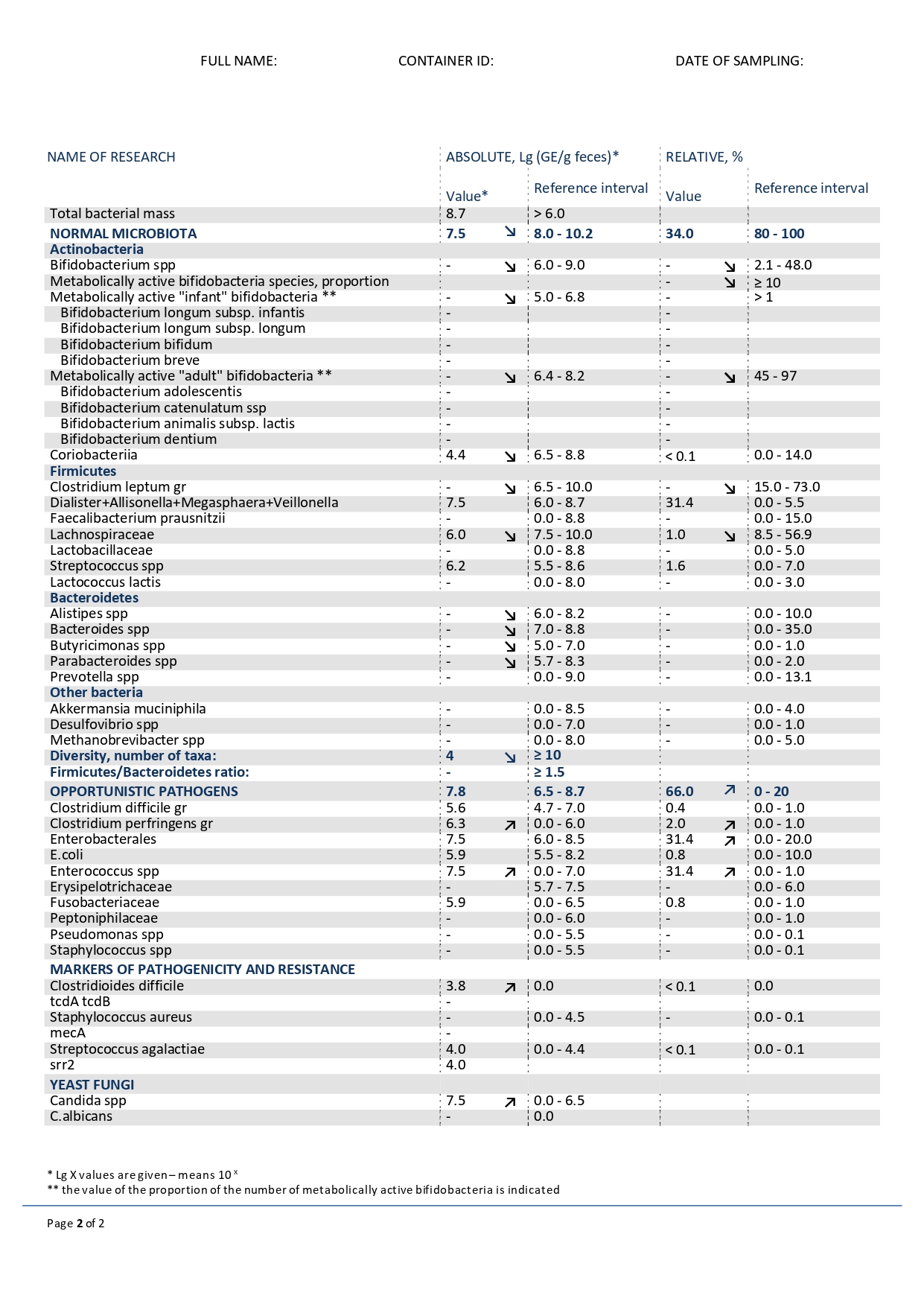
Main indicators
-
Normal microbiotaDepending on the age, the test assesses the share and diversity of normal microbiota – the main indicators of healthy intestine.
-
Bifidobacterium spp.
- Absolute amount of Bifidobacterium spp. The main representative of healthy gut microbiota in children before 2 years of age.
- Metabolically active Bifidobacterium. The test determines the share of metabolically active Bifidobacterium spp. representative among all the Bifidobacterium, including typing and quantitative assessment.
- Metabolically active infant-type Bifidobacterium. They have the biggest influence on gut microbiota development in the first years of life. For children before 2 years of age, the test assesses the share and diversity of metabolically active infant-type Bifidobacterium.
-
Bacteroidota (Bacteroidetes)For kids from 7 months, the presence/absence of Bacteroidota (Bacteroidetes) is determined.
-
Bacillota (Firmicutes) / Bacteroidota (Bacteroidetes)For kids from 2 years, the Bacillota (Firmicutes) / Bacteroidota (Bacteroidetes) ratio is assessed; decrease associated with chronic gut inflammation is noted.
-
Yeast fungiAbsolute amount of yeast fungi, including Candida albicans, is determined.
-
Opportunistic microbiotaAssessment of opportunistic microbiota (pathobionts) share.
-
EnterobacteralesPresence of potentially pathogenic Enterobacterales representatives is determined as a difference between Enterobacterales and E.coli absolute values.
-
Pathogenicity and resistance markersWe recommend to handle the results pathogenicity and resistance markers’ detection in amounts above the threshold value considering the clinical picture of each patient separately, especially in cases of gut normobiosis disruption.

ENTEROFLOR® Kiddy: Questions
-
Why are there so many microorganisms in the test?Human gut microbiota is a complex, dynamic system composed of multiple microorganism groups interacting with each other and human organism and performing a number of important duties. To assess gut microbiota properly, we need to view all the microorganism groups as parts of the whole. ENTEROFLOR® Kiddy includes 43 indicators comprising at least 99.9% of children’s gut microbiota.
-
Why is there no opportunity to diagnose acute enteric infections (AEI) in ENTEROFLOR® Kiddy? What are the actions, if the patient has AEI symptoms?ENTEROFLOR® Kiddy is designed to diagnose gut dysbiosis associated with chronic inflammations, prolonged digestion disruption, antibiotics intake, etc. If a patient has AEI symptoms (vomiting, diarrhea, stomach pains), in the cases where no AEI agents are detected, ENTEROFLOR® Kiddy can be assigned.
-
Can biomaterial of patients older than 14 years of age be tested by ENTERFLOR® Kiddy?Specific report forming algorithm is developed for children under 14. For biomaterial of the older patients, final gut microbiota assessment may be difficult.
-
Can ENTEROFLOR® Kiddy results be compared to microbiological dysbiosis analysis? Will the results match?Dysbiosis analysis and PCR are based on two different technologies, thus the results may differ. Feces culture for dysbiosis involves detection of certain bacteria and fungi, unlike standard culture where a wide range of microorganisms is cultivated on various nutrient media. However, dysbiosis analysis has limitations typical for microbiological analysis as a whole: 50–80% of microorganisms composing gut microbiota are hard to cultivate and, therefore, not detected by this method. Culture results depend directly on microorganisms’ viability and, consequently, the time interval between biomaterial collection and its delivery to the lab, sample transport and storage conditions. ENTEROFLOR® Kiddy utilizes a direct microorganisms’ diagnostic method by DNA fragments which does not require the bacterial viability.
-
Why are normal values for ENTEROFLOR® Kiddy do not match the values for microbiological dysbiosis analysis?Traditional dysbiosis analysis, based on stool culture with its inherent limitations, used reference norms for just two broad age groups (under and over 1 year). In contrast, real-time PCR technology enables a broader detection panel and has facilitated the establishment of precise, age-specific reference ranges. The fundamental differences between these technologies are explained in detail above.

Information

Ask questions
Please note that the specialists of the DNA Technology company provide consultations exclusively to medical specialists on the application and research features. Requests related to the appointment, delivery, or interpretation of tests are not considered. For relevant information, we recommend contacting the laboratory directly.