BRCA Mutations
A test for mutations in BRCA1 (185delAG, 4153delA, 5382insC, 3819delGTAAA, 3875delGTCT, 300 T>G (Cys61Gly), 2080delA) and BRCA2 (6174delT) genes associated with a risk of developing oncopathology.

BRCA1 and BRCA2 mutations
BRCA1 and BRCA2 mutations play a key role in the pathogenesis of hereditary breast, ovarian, prostate, pancreatic and other cancers. BRCA1 and BRCA2 genes encode proteins involved in repairing DNA double-strand breaks through homologous recombination. Disruptions in the function of these proteins (due to mutations in the corresponding genes) lead to the accumulation of genetic damage and increase the risk of malignant transformations.
The most prevalent BRCA1 gene mutations include:
- 185delAG – deletion of two nucleotides (adenine and guanine) at position 185 followed by a premature stop codon formation.
- 4153delA – deletion of adenine at position 4153, which causes a reading frame shift.
- 5382insC – insertion of cytosine at position 5382, causing a reading frame shift and premature termination of protein synthesis.
- 3819delGTAAA – deletion of five nucleotides at position 3819, producing an abnormal protein with loss of functional activity.
- 3875delGTCT – loss of four nucleotides at position 3875.
- 300 T>G (Cys61Gly) – point mutation resulting in a replacement of cysteine with glycine at position 61.
- 2080delA – adenine deletion at position 2080.
For BRCA2 gene, the 6174delT mutation, which is a deletion of thymine at position 6174, is considered dangerous.
Mutations in the BRCA1 and BRCA2 genes significantly increase the risk of hereditary breast cancer (BC). By the age of 70, the average cumulative risks of developing breast cancer for BRCA1 mutation carriers reach 57-65%, and 45-49% for BRCA2 mutation carriers. BRCA-associated forms of breast cancer are characterized by an early onset of disease and a more aggressive course compared to other forms. Immunohistochemical analysis of the breast shows that up to 80% of BRCA1-associated neoplasms have a triple negative immunophenotype (ER-, PR-, HER2/neu-). The neoplasms are characterized by a high degree of malignancy, often revealing marked lymphoid infiltration.
The frequency of BRCA1/2 gene mutations in ovarian cancer patients is currently estimated at 20%. The risk of pathology development by the age of 70 increases significantly and amounts to 39-63% for patients with BRCA1 gene mutations and 16.5-27% for those BRCA2 gene mutations.

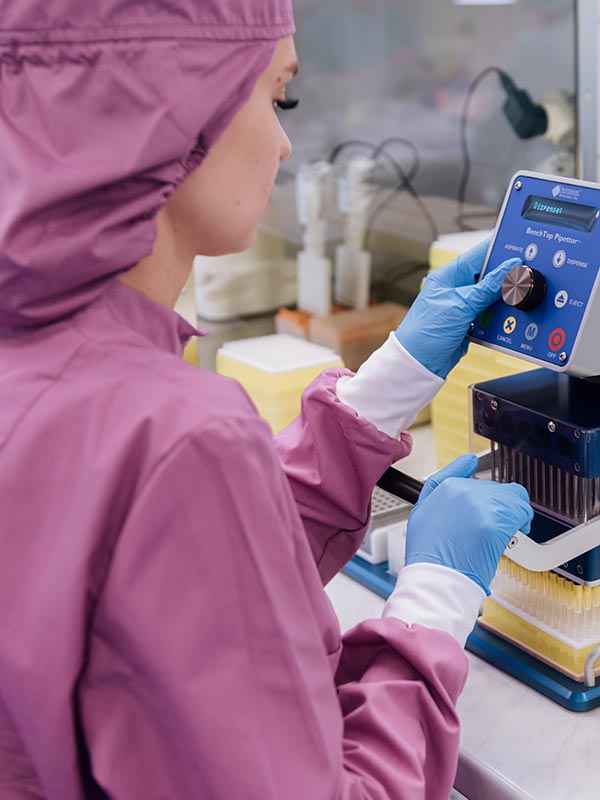
Indications for testing
-
 Aggravated family history;
 -
 Breast cancer diagnosis at a young age;
 -
 Prostate cancer;
 -
 Pancreatic cancer;
 -
 Tumors of undetected primary localization;
 -
 Ovarian and fallopian tube cancer;
 -
 Serous and endometrioid carcinomas with a high grade of malignancy.
BRCA Mutations
BRCA mutations REAL-TIME PCR Genotyping Kit is intended for detection of mutations in BRCA1 gene (mutations 185delAG, 4153delA, 5382insC, 3819delGTAAA, 3875delGTCT, 300T>G (Cys61Gly), 2080delA) and BRCA2 gene (mutation 6174delT) associated with inherited susceptibility to breast cancer and ovarian cancer.
Sample: peripheral blood.
READ MORE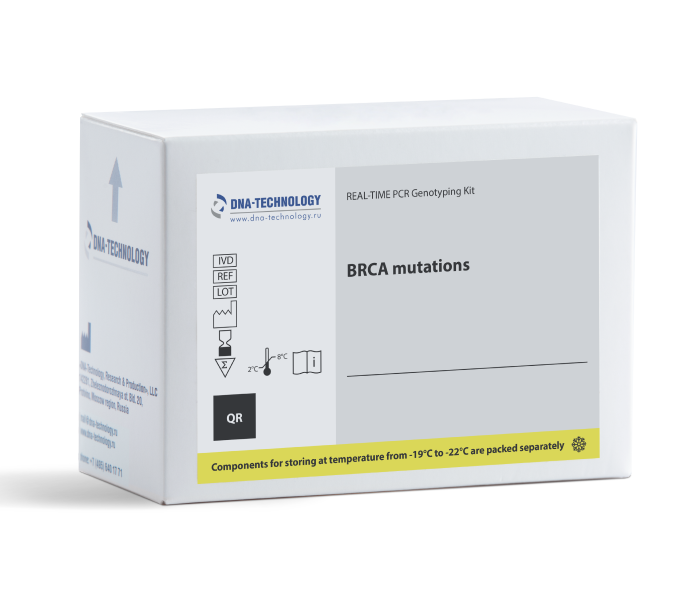
Information


Ask questions
Please note that the specialists of the DNA Technology company provide consultations exclusively to medical specialists on the application and research features. Requests related to the appointment, delivery, or interpretation of tests are not considered. For relevant information, we recommend contacting the laboratory directly.