Femoflor®
Multiplex female urogenital microbiota PCR assay developed and produced by DNATechnology.
Category «Microbiota Research»
Femoflor®
FEMOFLOR® is a line of cutting-edge diagnostic tests developed for multiplex microbiota analysis of female reproductive system.
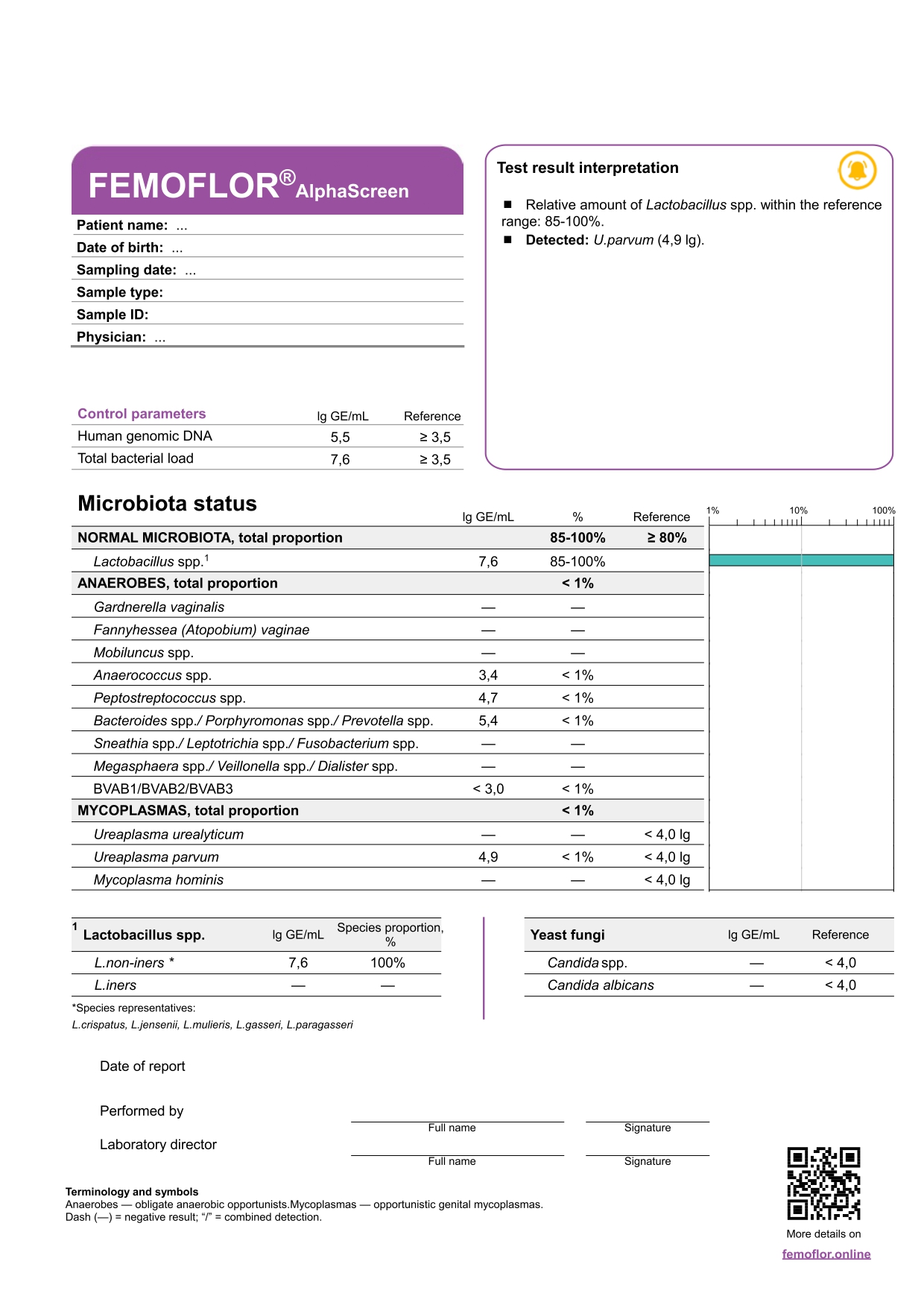
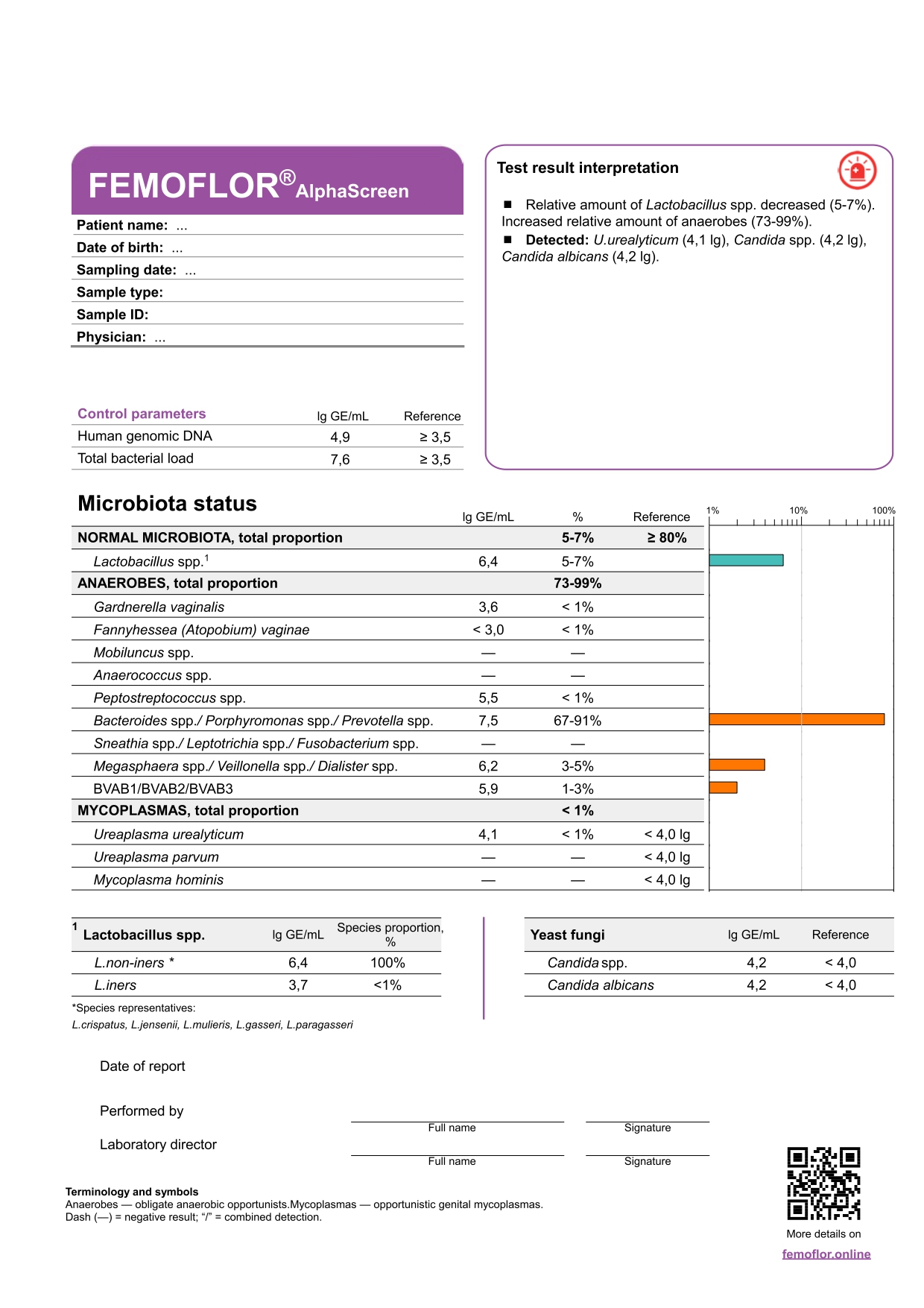
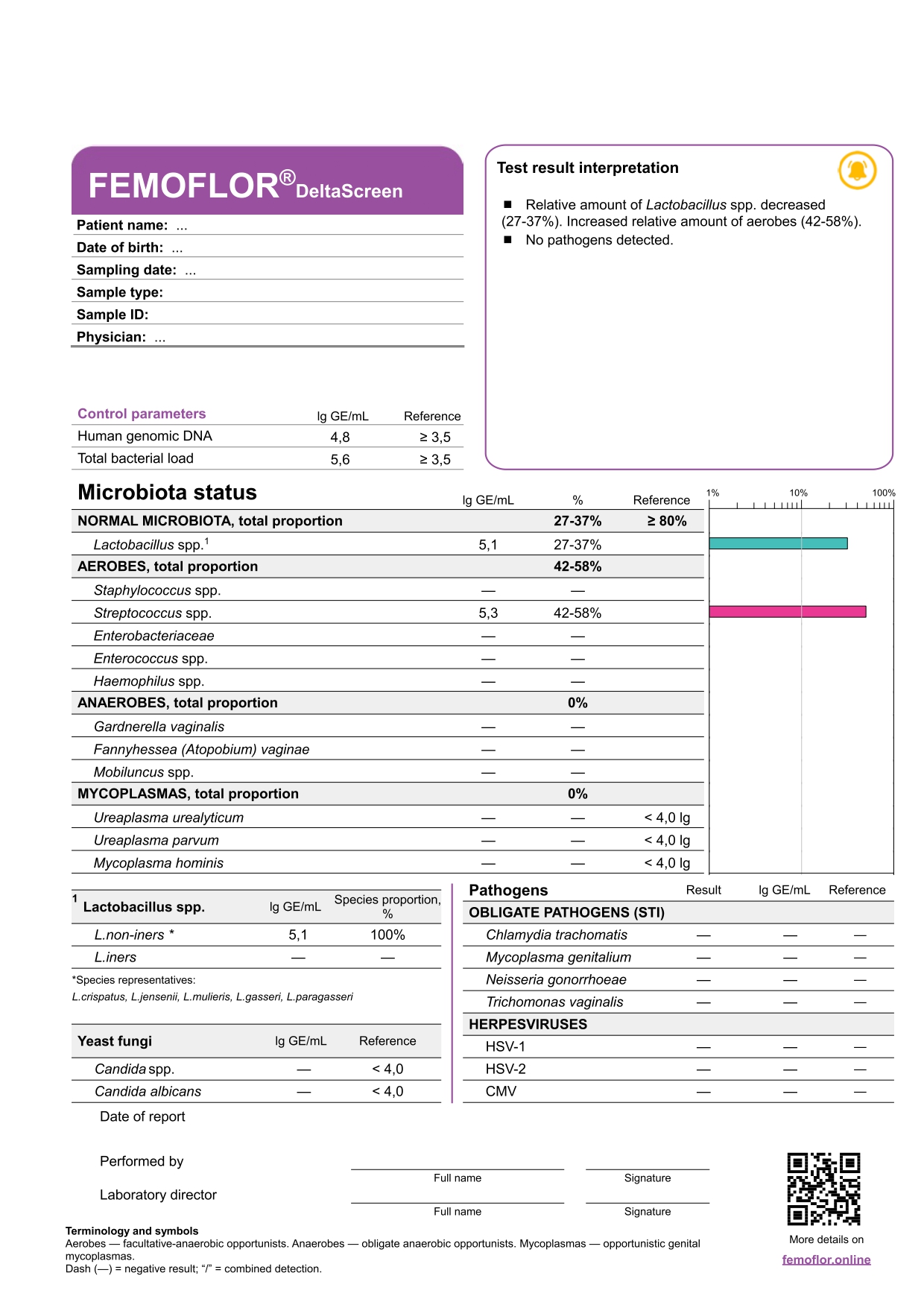
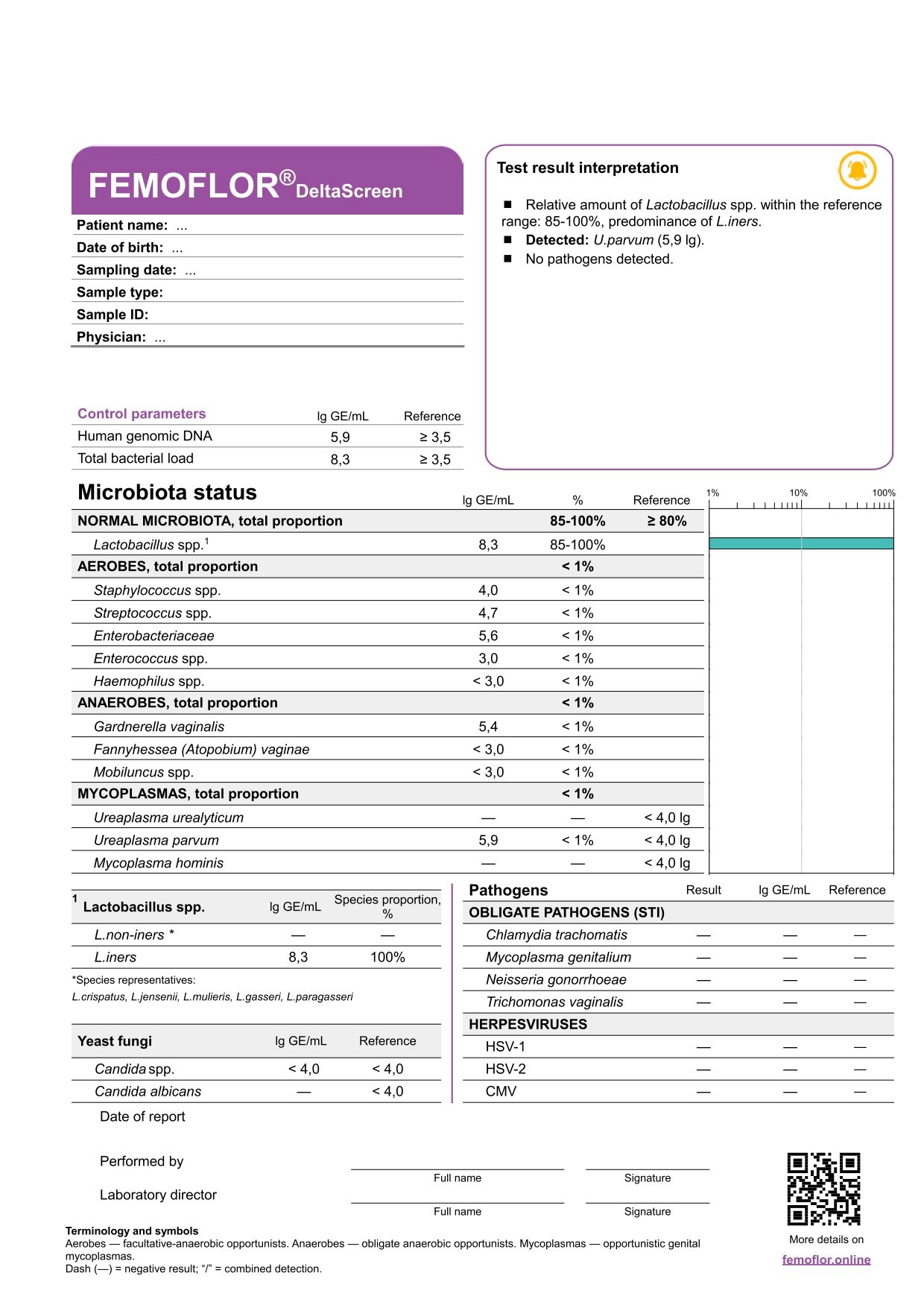
FEMOFLOR® tests are based on a unified principle: assessing the proportions of normobiota and opportunistic pathogens to determine the dominant microbial group. They are available in several versions: FEMOFLOR®II, FEMOFLOR®AlphaScreen, FEMOFLOR®DeltaScreen, FEMOFLOR® 16, and FEMOFLOR® Screen.
The new reagent line includes FEMOFLOR®II, FEMOFLOR®AlphaScreen, and FEMOFLOR®DeltaScreen, which expand diagnostic capabilities and provide a more comprehensive analysis.
The kit includes two quality controls:
- Based on the quantity of epithelial cells (sample intake control – SIC, or human genomic DNA – HGD)
- Based on the total microbial load of the biotope (total bacterial load – TBL).
* The control parameters determine whether the amount of biological material is sufficient to quantify normobiota and opportunistic pathogens. For pathogenic microorganisms, the result is reported independently of the control parameters.
Clinical samples for analysis include scrapings of epithelial cells from the vagina (posterior vaginal fornix), urethra, and cervical canal. Vaginal biomaterial can be collected not only by healthcare professionals but also through self-sampling using specialized devices. For the FEMOFLOR®II, FEMOFLOR®AlphaScreen, and FEMOFLOR®DeltaScreen tests, samples collected into a liquid-based cytology transport medium are also acceptable.
To obtain a correct result, on the day before the test, one should NOT:
- Carry out genital toilet with antiseptic agents or perform douching
- Use substances that inhibit PCR, such as ultrasound contact gel, heparin, chlorhexidine, or other chlorine-containing products
- Undergo a transvaginal ultrasound examination
- Use medicinal products (antiseptics, pro- and eubiotics), tampons; it is also recommended to abstain from sexual intercourse
Comparison of FEMOFLOR® tests
-
FEMOFLOR®II
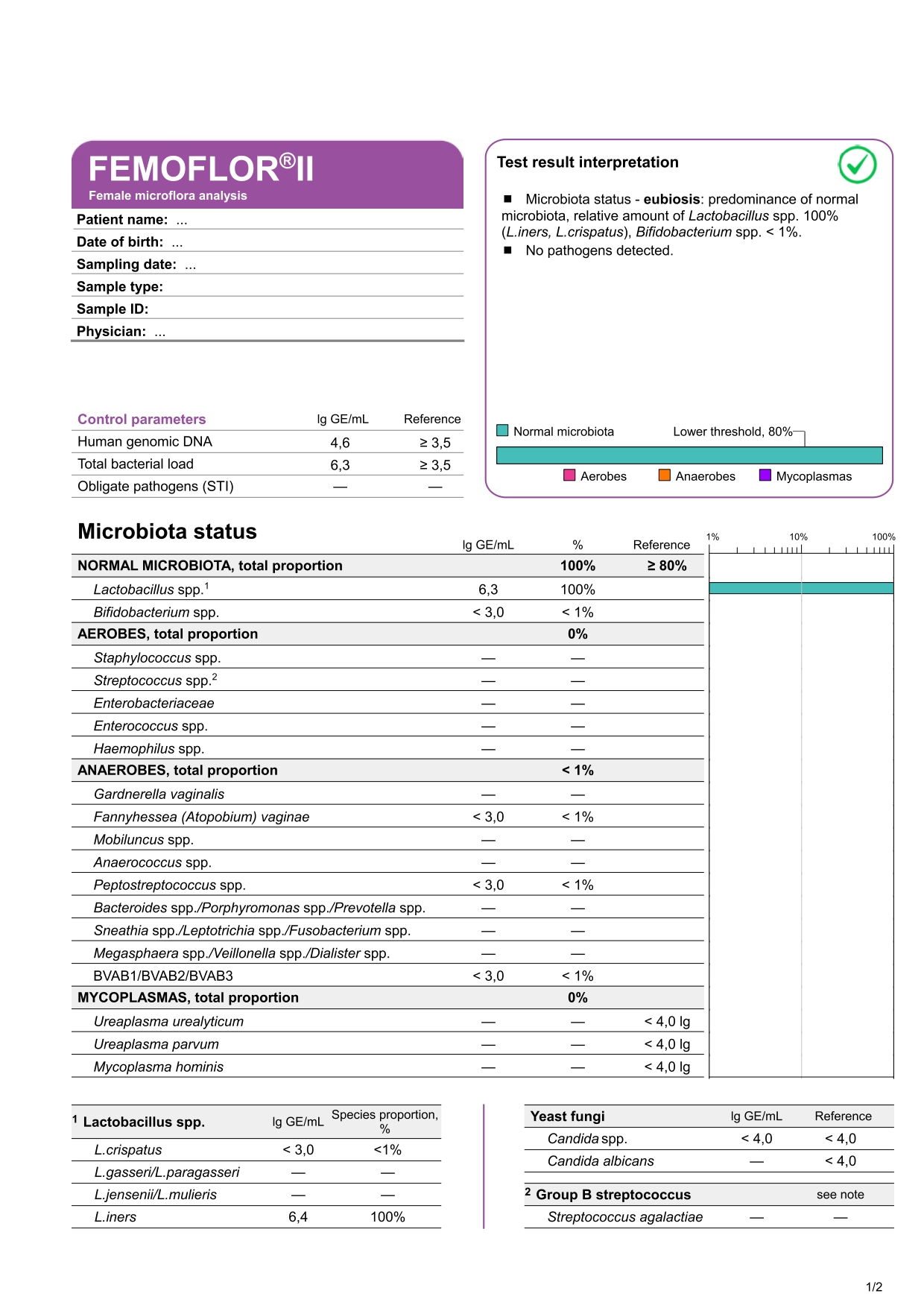
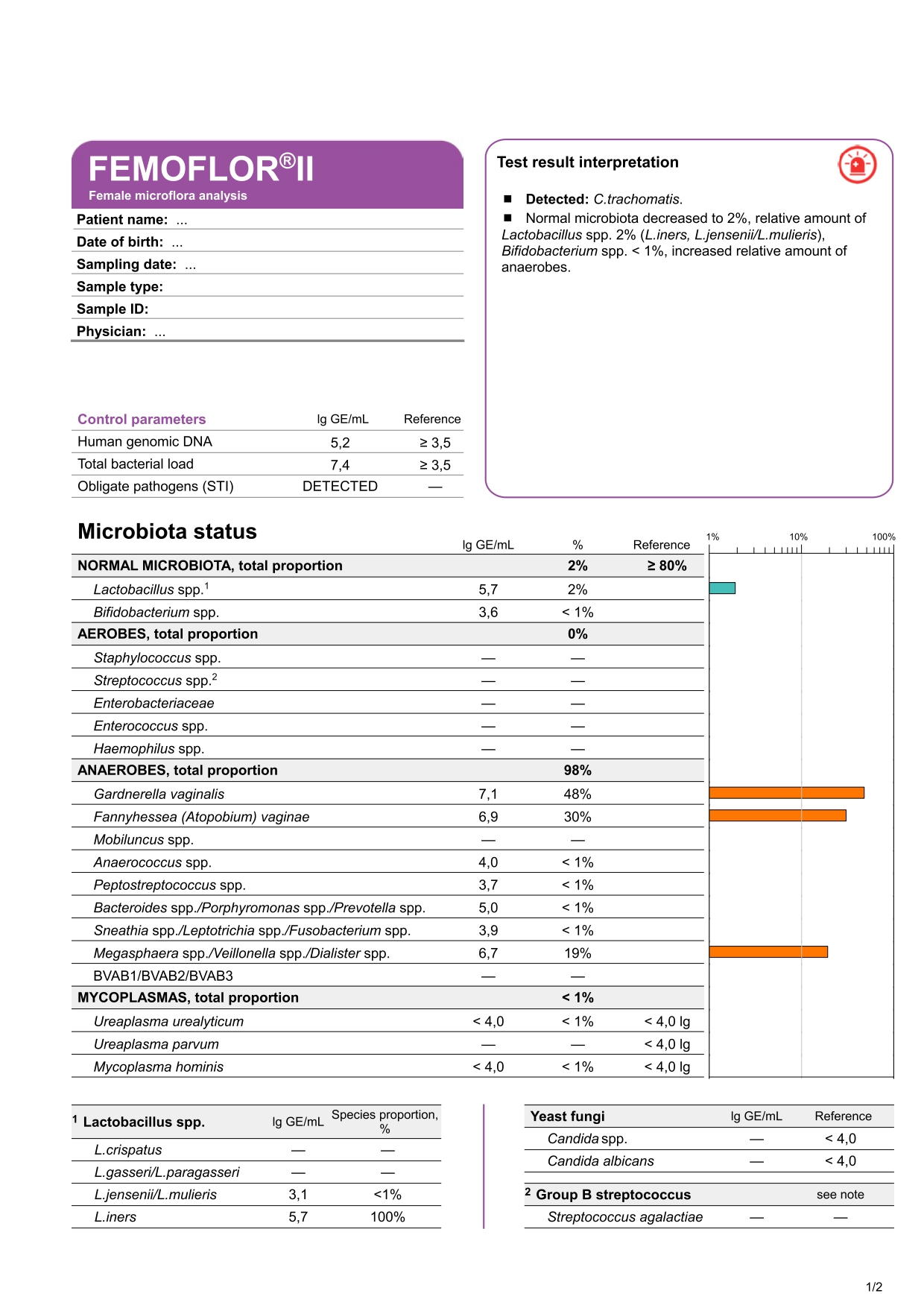
A universal test for assessing female microbiota status with comprehensive capabilities. The analysis includes a detailed evaluation of normal microbiota (quantification of lactobacilli and bifidobacteria, lactobacillus typing), an extended panel of opportunistic microorganisms, as well as the detection of pathogens (major sexually transmitted infections, herpesviruses, and HPV).
-
FEMOFLOR®AlphaScreen
A concise version of FEMOFLOR® II for diagnosing bacterial vaginosis.
-
FEMOFLOR®DeltaScreen
A comprehensive test for diagnosing inflammatory infections of the female reproductive tract.
| Analytes | FEMOFLOR®II | FEMOFLOR®DeltaScreen | FEMOFLOR®AlphaScreen |
|---|---|---|---|
| Human genomic DNA | |||
| Total bacterial load | |||
| Normal microbiota | |||
| Lactobacillus spp. | |||
| L. crispatus | |||
| L. jensenii/ L. mulieris | |||
| L. gasseri/ L. paragasseri | |||
| L. iners | |||
| L. non-iners | |||
| Bifidobacterium spp. | |||
| Aerobes | |||
| Staphylococcus spp. | |||
| Streptococcus spp. | |||
| Streptococcus agalactiae | |||
| Enterobacteriaceae | |||
| Enterococcus spp. | |||
| Haemophilus spp. | |||
| Anaerobes | |||
| Gardnerella vaginalis | |||
| Fannyhessea vaginae (Atopobium vaginae) | |||
| Mobiluncus spp. | |||
| Anaerococcus spp. | |||
| Peptostreptococcus spp. | |||
| Bacteroides spp./ Porphyromonas spp./ Prevotella spp. | |||
| Sneathia spp./ Leptotrichia spp./ Fusobacterium spp. | |||
| Megasphaera spp./ Veillonella spp./ Dialister spp. | |||
| BVAB1 / BVAB2 / BVAB3 | |||
| Mycoplasma | |||
| Ureaplasma urealyticum | |||
| Ureaplasma parvum | |||
| Mycoplasma hominis | |||
| Yeast fungi | |||
| Candida spp. | |||
| Candida albicans | |||
| Pathogens | |||
| Chlamydia trachomatis | |||
| Mycoplasma genitalium | |||
| Neisseria gonorrhoeae | |||
| Trichomonas vaginalis | |||
| Herpes viruses | |||
| HSV-1 | |||
| HSV-2 | |||
| CMV | |||
| Human papillomavirus (HPV) | |||
| HPV 16 | |||
| HPV 18 | |||
| HPV 45 | |||
| HPV 31/ 33/ 35/ 39/ 51/ 52/ 56/ 58/59/ 66/ 68 | |||
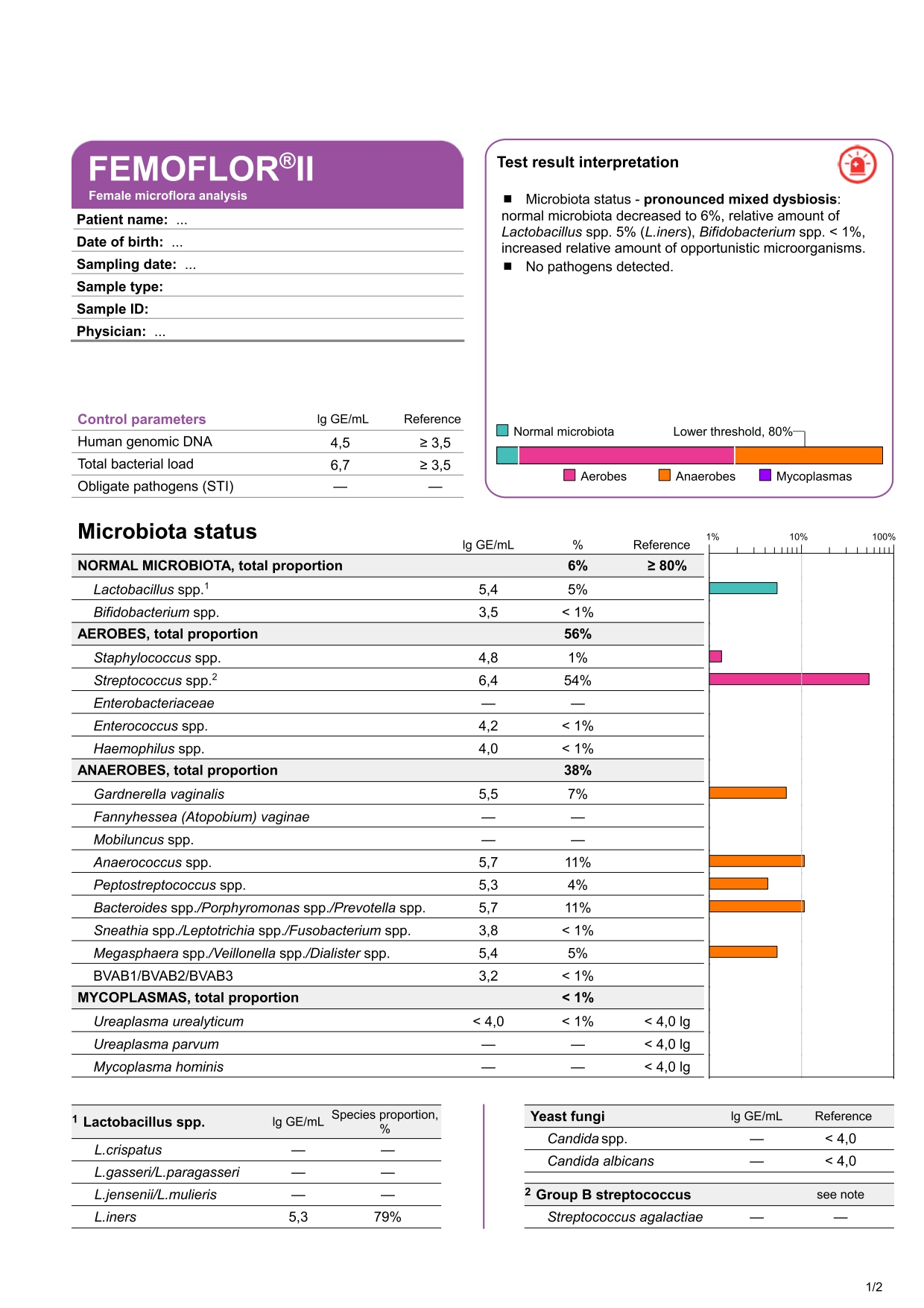
FEMOFLOR®II
Female microflora test
| Full name | |
| Age | |
| Biomaterial collection date | |
| Biomaterial collection site | V |
| Sample ID | |
| Physician |
| Control indicators | lg GE/mL | Reference |
|---|---|---|
| Human genomic DNA | 4,5 | ≥ 3,5 |
| Total bacterial load | 6,7 | ≥ 4,0 |

- Microbiota state:Severe mixed dysbiosis. Normal microbiota is reduced to 6%; the relative amount of Lactobacillus spp. is 5% (L. iners), Bifidobacterium spp. is < 1%; the relative count of opportunistic microorganisms is increased.
- Pathogens are not detected
Microbiota state
| lg GE/mL | % | Reference | |
|---|---|---|---|
| Normal microbiota, total share | 5-7% | ≥ 80% | |
| Lactobacillus spp.1 | 5,4 | 4-6% | |
| Biffidobacterium spp. | 3,5 | < 1% | |
| Aerobes, total share | 48-64% | ||
| Staphylococcus spp. | 4,8 | 1-2% | |
| Streptococcus spp.2 | 6,4 | 46-62% | |
| Enterobacteriaceae | - | - | |
| Enterococcus spp. | 4,2 | < 1% | |
| Haemophilus spp. | 4,0 | < 1% | |
| Anaerobes, total share | 32-44% | ||
| Gardnerella vaginalis | 5,5 | 6-8% | |
| Fannyhessea (Atopobium) vaginae | - | - | |
| Mobiluncus spp. | - | - | |
| Anaerococcus spp. | 5,7 | 9-13% | |
| Peptostreptococcus spp. | 5,3 | 3-5% | |
| Bacteroides spp. / Porphyromonas spp. / Prevotella spp. | 5,7 | 9-13% | |
| Sneathia spp. / Leptotrichia spp. / Fusobacterium spp. | 3,8 | < 1% | |
| Megasphaera spp. / Veillonella spp. / Dialister spp. | 5,4 | 4-6% | |
| BVAB1 / BVAB2 / BVAB3 | 3,2 | < 1% | |
| Mycoplasmas, total share | < 1% | ||
| Ureaplasma urealyticum | < 4,0 | < 1% | < 4,0 lg |
| Ureaplasma parvum | - | - | < 4,0 lg |
| Mycoplasma hominis | - | - | < 4,0 lg |

| 1Lactobacillus spp | lg GE/mL | Share of species in Lactobacillus spp. |
|---|---|---|
| L. crispatus | - | - |
| L.gasseri/L.paragasseri | - | - |
| L.jensenii/L.mulieris | - | - |
| L.iners | 5,3 | 79% |
| Yeast fungi | lg GE/mL | Reference |
|---|---|---|
| Candida spp. | - | < 4,0 |
| Candida albicans | - | < 4,0 |
| 2Group B Streptococcus | See note | |
| Streptococcus agalactiae | - | - |
| Full name | |
|---|---|
| Sample ID | |
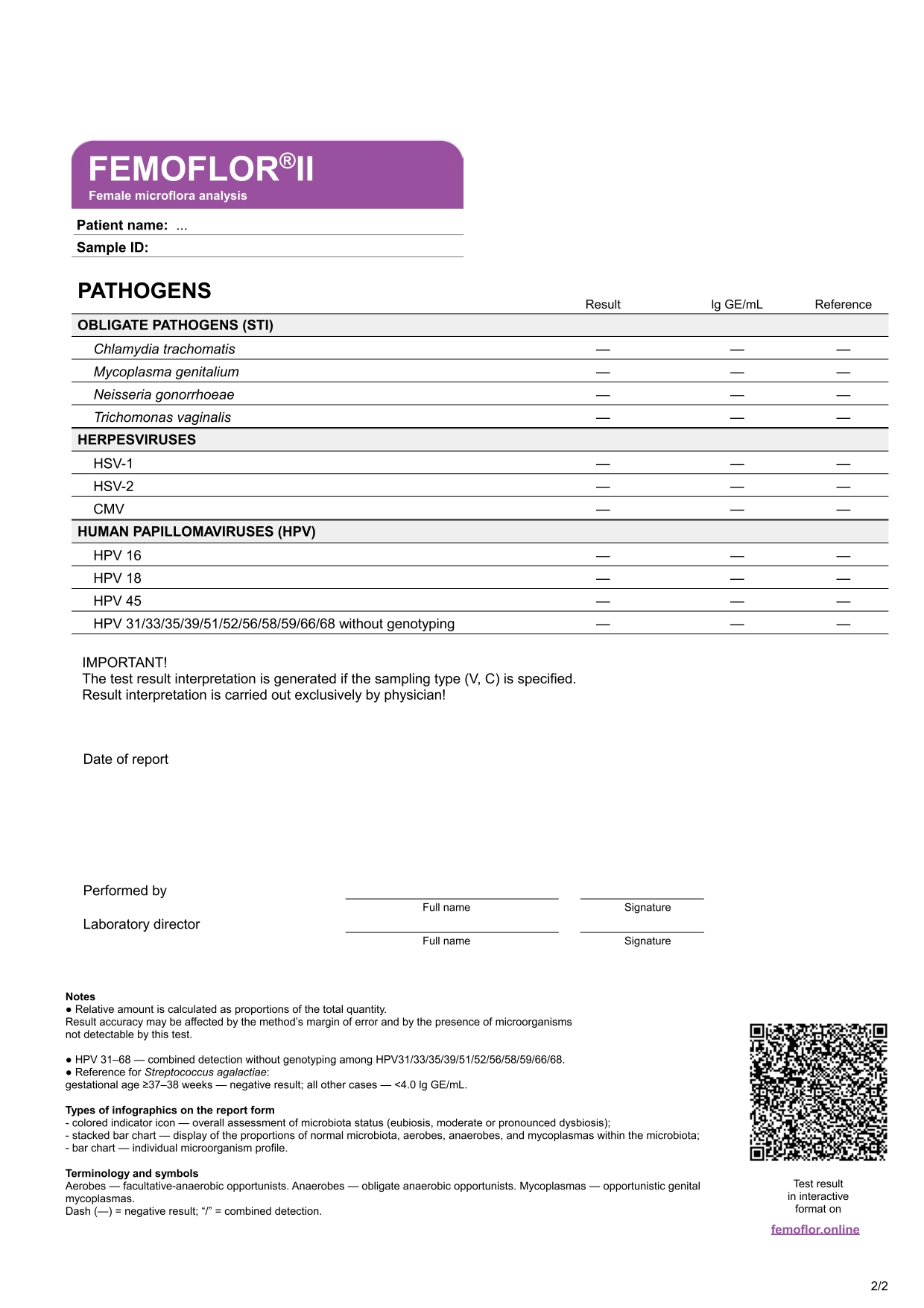
Pathogens
| Result | lg GE/mL | Reference | |
|---|---|---|---|
| Obligate pathogens | |||
| Chlamydia trachomatis | - | - | - |
| Micoplasma genitalium | - | - | - |
| Neisseria gonorrhoeae | - | - | - |
| Trichomonas vaginalis | - | - | - |
| Herpes viruses | |||
| HSV-1 | - | - | - |
| HSV-2 | - | - | - |
| CMV | - | - | - |
| Human papillomaviruses (HPV) | |||
| HPV-16 | - | - | - |
| HPV-18 | - | - | - |
| HPV-45 | - | - | - |
| HPV-31/ 33/ 35/ 39/ 51/ 52/ 56/ 58/59/ 66/ 68 | - | - | - |
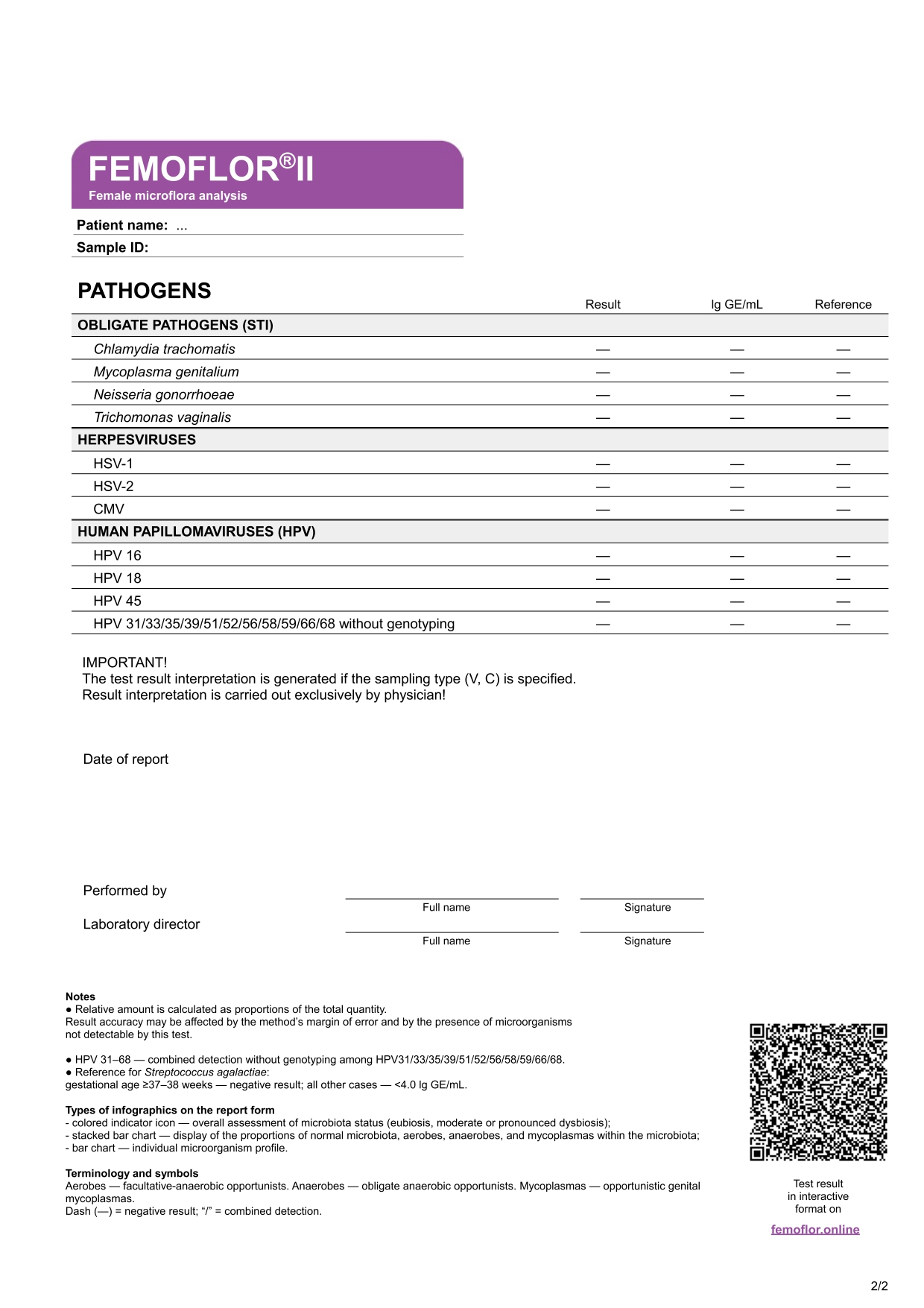
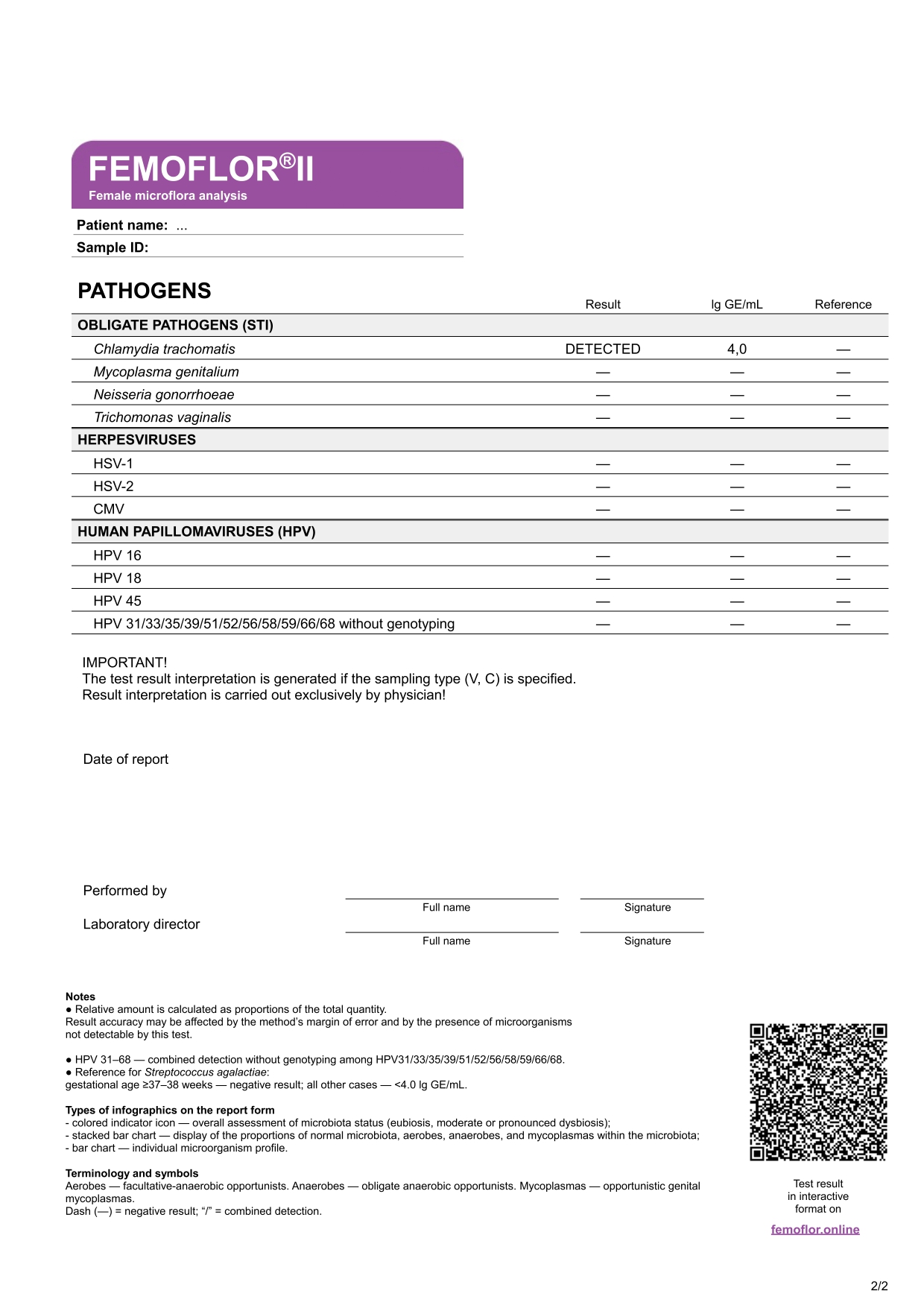
Important! The final result is generated only when the specimen collection site (V, C) is specified. The test result must be interpreted solely by the attending physician!
Notes
HPV 31-68 – cumulative detection without differentiation of HPV-31/ 33/ 35/ 39/ 51/ 52/ 56/ 58/59/ 66/ 68
Reference for Steptococcus agatactiae:
Gestation period of more than 37–38 weeks: negative result; other cases: < 4,0 lg GE/mL
Types of infographics in the report
- Colored indicator: final assessment of microbiota status (eubiosis, moderate or marked dysbiosis)
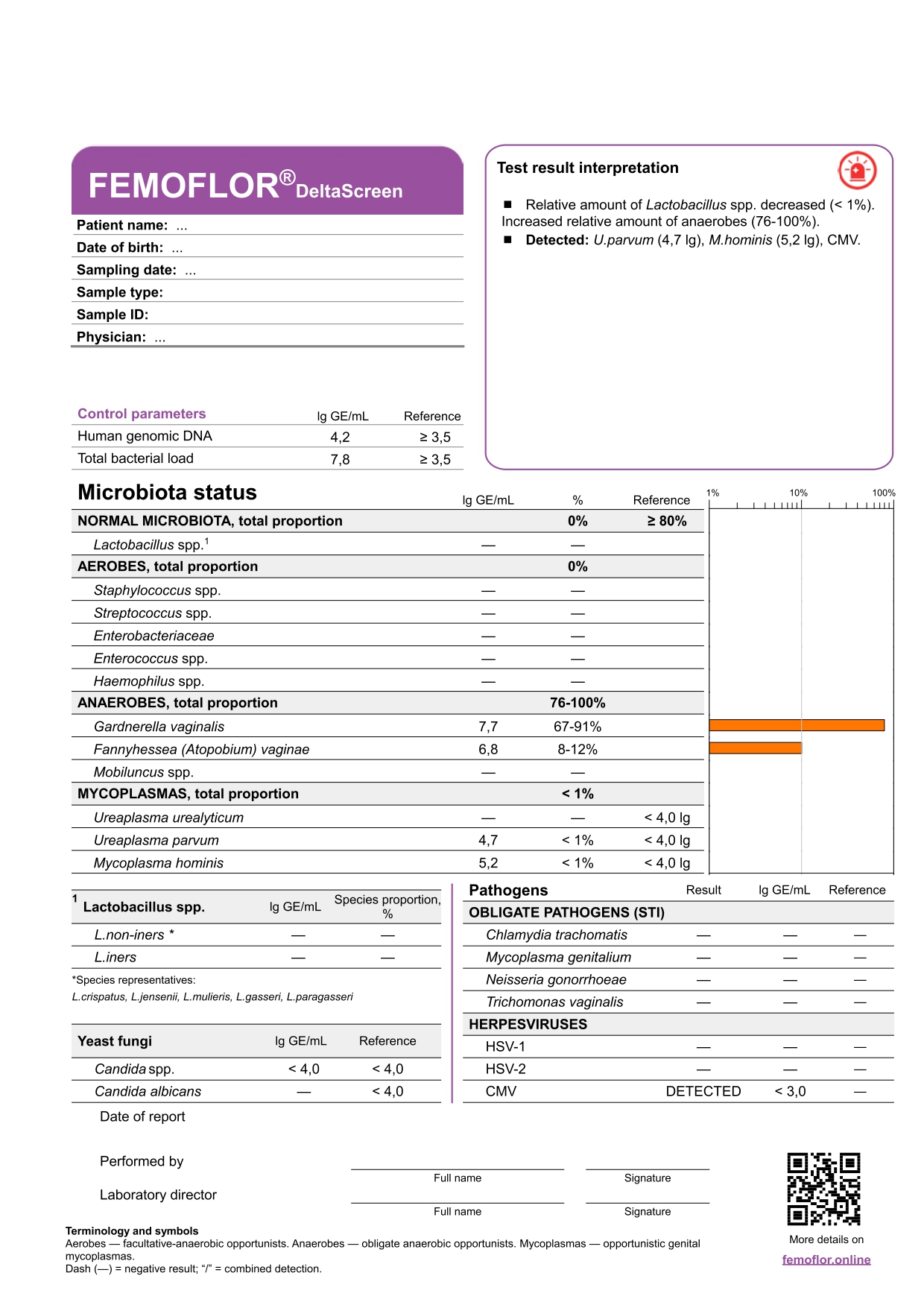
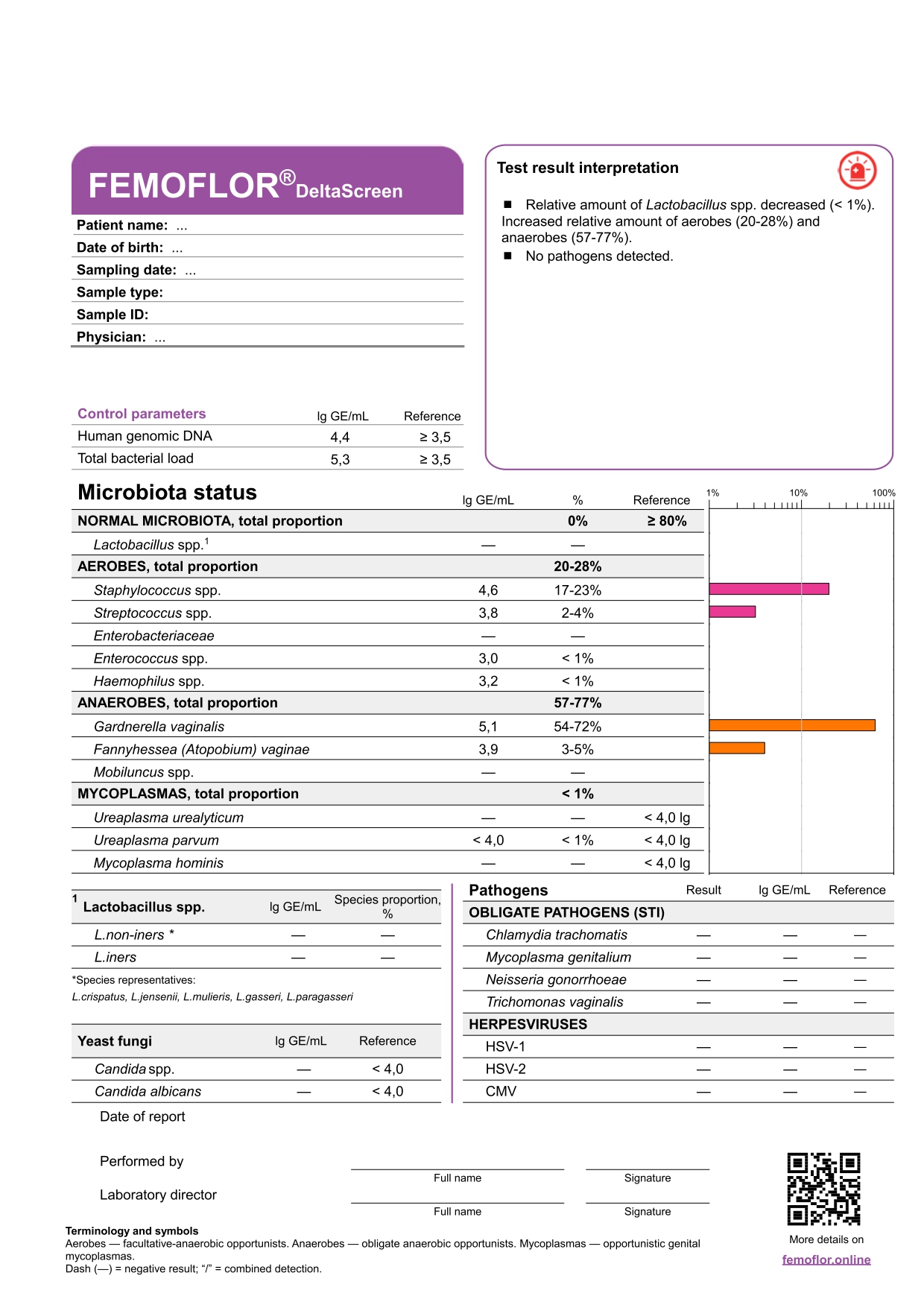
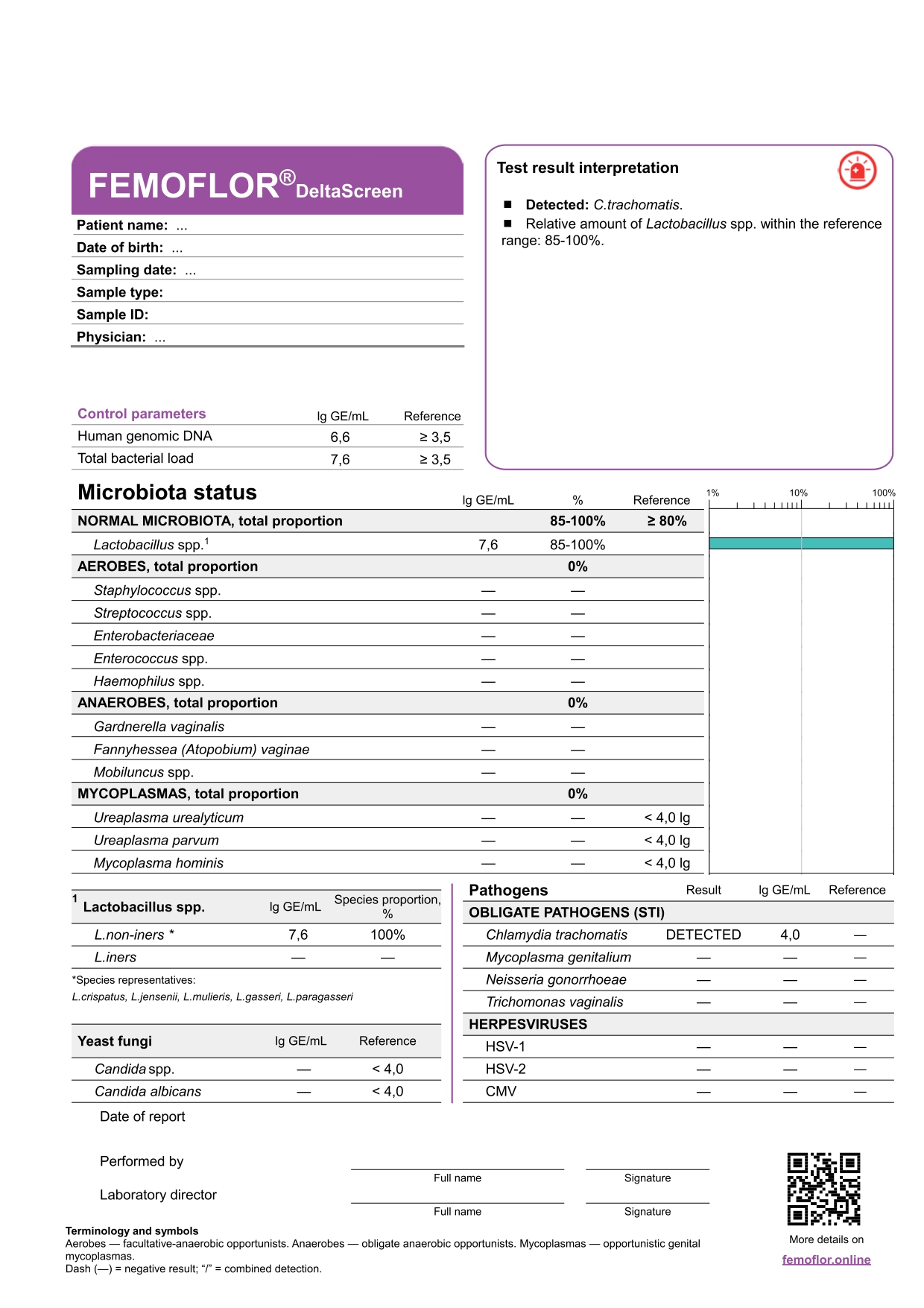
- Linear chart: visualization of the proportions of normobiota, aerobes, anaerobes, and mycoplasmas within the microbiota
- Bar chart: individual microorganism profile
Terms and definitions
Aerobes are facultative anaerobic opportunistic microorganisms.
Anaerobes are obligate anaerobic opportunistic microorganisms.
Mycoplasmas are opportunistic genital mycoplasmas.
A dash (-) indicates a negative result; a result with a "/" indicates cumulative detection without differentiation.

A “traffic light” color-coded indicator system
| Analytes | Pathogens | ||
|---|---|---|---|
| Yes | No | ||
| Total bacterial load |
Viruses Mycoplasmas* ≥ 4 lg GE/mL Candida** ≥ 4 lg GE/mL |
||
| Yes | No | ||
| Eubiosis |
|

|

|
| Moderate dysbiosis |
|
|
|
| Severe dysbiosis |
|
|
|
|
* Ureaplasma urealyticum Ureaplasma parvum Mycoplasma hominis |
** Candida spp. Candida albicans |
||
- Individual text commentary following the test results.
- Color-coded indicator icon: final assessment of microbiota status and presence of pathogens using a “traffic light” system (see table above).
- Linear chart: a graphic representation of the proportions of normal microbiota, aerobes, anaerobes, and mycoplasmas within the microbiota; the colors indicate the total quantity of microorganisms in each group.
- Bar chart: a microorganism profile, showing the detailed distribution of opportunistic pathogens within the group.
- QR code links to an individual interactive report on the femoflor.online website femoflor.online (for FEMOFLOR®II tests).

State of urogenital tract microbiota seriously affects female reproductive function and quality of life.
Find out more about microbiomeIndications for the assay
-
 Diagnosis of urogenital tract infections
 -
 Preventive / routine screening
 -
 Change of sexual partner
 -
 Pregnancy planning, IVF preparation
 -
 Infertility, recurrent pregnancy loss
 -
 Pelvic surgery preparation
 -
 Therapy efficacy monitoring
 -
 Microbiota imbalance following an antibiotic therapy
Report examples
Information




Do you have any questions about FEMOFLOR®?
Please note that the specialists of the DNA Technology company provide consultations exclusively to medical specialists on the application and research features. Requests related to the appointment, delivery, or interpretation of tests are not considered. For relevant information, we recommend contacting the laboratory directly.