BacResista GLA, BacResista GLA Van/Mec
A test to identify glycopeptide and beta-lactam antibiotic resistance genes in DNA derived from bacterial cultures found in human biological material.
Category «Identification of antibiotic resistance genes»
Antibiotic resistance
Antibiotic resistance represents one of the greatest challenges for global healthcare, significantly complicating treatment of infectious diseases. The widespread and uncontrolled use of antibiotics leads to the rapid spread of resistant strains of bacteria, making standard therapies less effective and increasing hospitalization duration, healthcare costs and risk of mortality.
The following options are available for this detection kit:
- BacResista GLA.
- BacResista GLA Van/Mec
BacResista GLA detects the following glycopeptide and beta-lactam antibiotic resistance genes:
- Van A/B. These genes confer resistance to vancomycin and teicoplanin, which are used to treat infections caused by gram-positive bacteria, including methicillin-resistant strains of Staphylococcus aureus (MRSA).
- Mec A. Enables resistance to methicillin and oxacillin. The presence of mec A allows bacteria to produce an altered penicillin-binding protein (PBP2a) that reduces the effectiveness of beta-lactam antibiotics.
- Tem, ctx-M-1, shv. These genes encode beta-lactamases, enzymes that break down penicillins and cephalosporins.
- Imp, kpc, ges, ndm, vim, оxa-40-like, oxa-48-like, oxa-23-like, oxa-51-like. These genes encode different types of carbapenemases, enzymes that degrade the β-lactam ring of carbapenem antibiotics.

BacResista GLA and BacResista GLA Van/Mec
BacResista GLA Van/Mec is a reduced version of BacResista GLA and is used to detect resistance genes to glycopeptide and beta-lactam antibiotics: van A/B (vancomycin, teicoplanin) and mec A (methicillin, oxacillin).
BacResista GLA is recommended for use in conjunction with "BacScreen OM": detecting DNA of opportunistic bacteria causing nosocomial and out-of-hospital infections.

Advantages of PCR-based diagnostics of antibiotic resistance
- Additional express information on the presence of antibiotic resistance genes in bacteria, which will decrease the time needed to select the optimal antibiotic therapy.
- The use of instrumental PCR methods allows obtaining reproducible results that do not depend on the specific features of the microbiology laboratory equipment.
- Ability to detect antibiotic resistance in hard-to-cultivate organisms.
- Ability to examine a wide range of biomaterials.
- High analytical sensitivity.
Indications for testing
-
 Lack of effectiveness of antibacterial therapy;
 -
 Infectious complications in oncologic patients;
 -
 Infectious complications in hospitalized patients (intensive care units, burn units, etc.);
 -
Presence of invasive devices (intubation tube, catheters, drains);
-
 Impairments of skin integrity: wounds, burns, bedsores;
 -
 Infections of postoperative wounds;
 -
 Upper and lower respiratory and urinary tract infections;
 -
Respiratory tract infections in patients with cystic fibrosis;
-
 Immunodeficiency disorders;
 -
 Neonatal infections.
БакРезиста GLA
Набор реагентов БакРезиста GLA предназначен для выявления генов резистентности к гликопептидным и бета-лактамным антибиотикам в препаратах ДНК, полученных из биологического материала человека и бактериальных культур из этого биоматериала (мокрота, моча, мазки\соскобы из дыхательных путей, желудочно-кишечного и урогенитального тракта, фекалии, аспираты, экссудаты) методом полимеразной цепной реакции в режиме реального времени с использованием детектирующих амплификаторов.
Исследуемый материал: биологический материал человека и бактериальные культуры из этого биоматериала (мокрота, моча, мазки\соскобы из дыхательных путей, желудочно-кишечного и урогенитального тракта, фекалии, аспираты, экссудаты).
ПОДРОБНЕЕ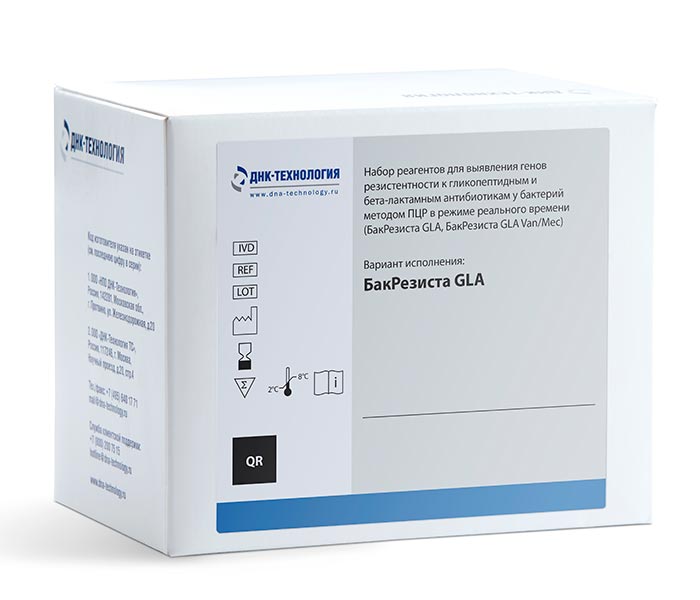
Information


Ask questions
Please note that the specialists of the DNA Technology company provide consultations exclusively to medical specialists on the application and research features. Requests related to the appointment, delivery, or interpretation of tests are not considered. For relevant information, we recommend contacting the laboratory directly.